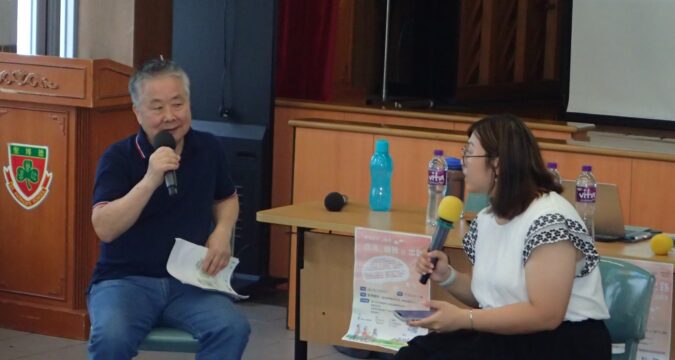
HONG KONG (SE): According to recent government statistics, nearly one in four people in Hong Kong is currently aged 65 or older. Within the next two decades, this ratio is expected to rise to one in three. Highlighting the urgent need for proper home care services for the elderly, the Diocesan Commission for Integral Human Development, in collaboration with St Patrick’s parish’s social concern group, hosted a talk on November 8.
The discussion emphasised a collective call for holistic, systemic changes to better integrate elderly services with caregiver support.
Seventy-six-year-old Cheung, shared his caregiving journey, which began when his mother returned to Hong Kong in her later years and needed assistance with her daily activities. Motivated by familial love and a sense of responsibility, he recently took on the task of caring for her alone.
He sought external support, such as temporary care arrangements and hiring foreign domestic workers. However, his efforts were often hindered by his mother’s wishes, financial pressures, limited availability of services, and communication barriers, causing him to frequently feel frustrated, stressed, and to experience health problems himself.
Wing Tang of the Concerning Home Care Service Alliance said that ideal elderly care emphasises a person-centred approach, interpersonal support, and a respectful environment.
…she noted that the current government community care voucher scheme is not user-friendly for senior citizens, as they must find and select qualified service providers independently. Many elderly people struggle to obtain information about different providers
She pointed out that many elderly people face obstacles accessing resources, noting that current services remain fragmented and often categorise elderly individuals by age and health status, resulting in many not receiving adequate support.
Additionally, she noted that the current government community care voucher scheme is not user-friendly for senior citizens, as they must find and select qualified service providers independently. Many elderly people struggle to obtain information about different providers.
Furthermore, as the amount of subsidy varies according to individual financial circumstances, many older people find the application process complicated. As a result, a significant number of eligible seniors opt for government-supported services instead.
Chiu Sin-ting, senior manager of the Christian Family Service Centre, highlighted the challenges of providing dignified support for the elderly. She explained that the single word “care” encompasses a multitude of daily tasks, from assisting with personal hygiene to administering medication, all of which contribute to creating a supportive and respectful environment for elderly people.
Chao shared insights from her experience at the social services organisation, stressing that the demand for home care is growing and now exceeds available resources. She explained the need for innovative solutions, such as the “Time Bank” initiative launched by the centre, to mobilise community support in addressing both the physical and emotional needs of the elderly, and to foster a more connected community.
Franciscan Father Stephen Chan pointed out that every stage of life, including old age, deserves love and respect. He referenced a biblical verse, “Listen to your father who gave you life, and do not despise your mother when she is old” [Proverbs 23:22], to highlight how children should treat their parents with love and dignity despite their inability to care for themselves or contribute.
At the same time, he encouraged elderly parents to learn humility and understand their children’s challenges, emphasising the importance of mutual respect and care within the family.