In early March last year, the United Nations adopted a resolution declaring 28 January as the International Day of Living Together in Peace [not to be confused with the International Day of Peace on May 16]. The purpose is clear: to foster tolerance, respect for religious and cultural diversity, and the advancement of human rights. The resolution calls upon nations, international organisations, civil society, and the media to mark this day with meaningful activities that cultivate a culture of peace, inclusion, understanding, and solidarity.
Yet despite such aspirations, aggression continues to scar many regions. The ambitions of leaders, quests for military expansion, and the pursuit of natural resources all too often ignite conflicts that leave innocent people suffering in the flames of war. The Russia-Ukraine conflict, now approaching its fourth year, exemplifies this tragedy. Despite ongoing international mediation, Russia and Ukraine have yet to reach a comprehensive ceasefire agreement. The road to peace, it seems, remains perilously long.
Closer to home in Asia, the border between Thailand and Cambodia erupted in violence in early December last year, with both sides exchanging attacks that resulted in civilian and military casualties. The fallout was immediate: residents evacuated border areas, local schools closed, and teachers and students sought temporary refuge with relatives in other villages. The Jesuit-run Xavier School in Cambodia—including its kindergarten, primary, and secondary divisions—was among those affected.
A Catholic lay missionary from Hong Kong, serving at the school, described the sporadic sounds of shelling but assured that, for now, all is calm. Such incidents remind us that war is never remote; indifference is not an option, and ignoring global conflict is a privilege we cannot afford.
In these times of mounting instability and conflict, the imperative to live together in peace has never been clearer. Peace is not merely the absence of war; it demands that, amid differences of gender, race, language, religion, or culture, we embrace one another with openness.
This year marks the 800th anniversary of the death of St. Francis of Assisi, whose legacy endures in the greeting, “may the Lord give you peace.” As Pope Leo XIV reminded the Franciscans, peace is the sum of all good—a gift from God that we are called to receive and practise daily.
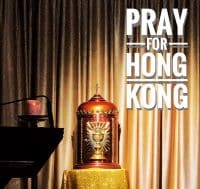
Last Sunday, January 18, the Catholic Diocese of Hong Kong hosted the “Love – A Spring of Hope,” a musical prayer gathering at Chater Garden in Central. The event symbolised a move beyond cathedral walls and into the heart of the community, spreading God’s love to all in Hong Kong while marking the diocese’s 80th anniversary. It was a living testament to a message of peace that has accompanied the people of Hong Kong through every trial and triumph.
Peace is not a destination but an ongoing journey—a long-term aspiration that demands our unwavering commitment. Let us, therefore, embrace wholeheartedly the principles and mission of love, seeking reconciliation not only with one another but with all of creation. SE