
Ambrose Mong
Chinese New Year is an annual 15-day festival celebrated in China and Chinese communities worldwide. The holiday is also called the Lunar New Year because celebration dates follow the moon’s phases. Legend surrounds the holiday’s origins. One story describes a monster named Nian 年 [Year] that attacked villagers at the beginning of each year.
This creature feared loud noises, bright lights, and the colour red. Celebrations now include firecrackers, fireworks, and red clothes and decorations to usher out the old year and welcome the new. Young people receive money in red envelopes (利是 or 紅包).
The Lunar New Year is a time to feast and visit family, relatives, and friends. Other customs include honouring deceased ancestors, ritual cleansing one’s home, and preparing special foods on certain days.
The Lantern Festival concludes the celebrations, with people hanging glowing lanterns in temples or carrying them in nighttime parades. Since dragons symbolise good fortune in Chinese culture, dragon dances highlight many New Year’s celebrations.
These traditions resonate with Catholic practices of renewal and thanksgiving, offering a connection between cultural heritage and faith.
As the horse gallops into the new year, its symbolism invites us to embrace Christian freedom and mission
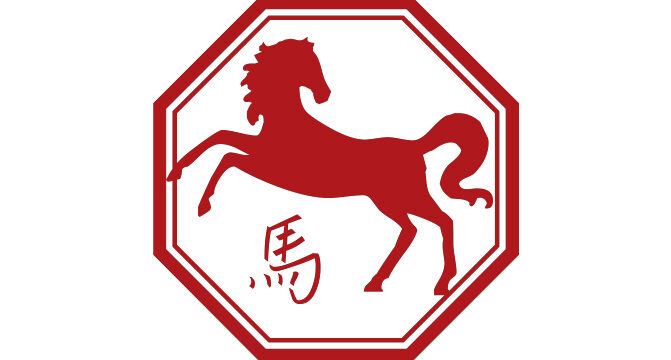
This year, 2026, Chinese New Year falls on February 17 and marks the start of the Year of the Fire Horse [火馬], a zodiac sign associated with energy, elegance, and freedom. It is also called the Spring Festival and marks the transition from winter to spring, symbolising renewal, hope, and a fresh start in the year.
Above all, it is a time of family reunion and strengthening of kinship.
Chinese New Year also serves as a cultural bond for Chinese communities worldwide, reaffirming shared values of family loyalty, respect for elders, diligence, and planning for the year symbolised by the forward-striding horse.
As the horse gallops into the new year, its symbolism invites us to embrace Christian freedom and mission.
Occurring just two days before Ash Wednesday, February 18, the Lunar New Year presents us with an opportunity to celebrate this festive season with moderation as we prepare for Lent.
It is an opportunity for us to give thanks to God as we evangelise with joy and hospitality. New Year celebration can become a sacramental moment for us to renew our faith through attending Mass and a family reunion dinner.
Occurring just two days before Ash Wednesday, February 18, the Lunar New Year presents us with an opportunity to celebrate this festive season with moderation as we prepare for Lent
During the Eucharistic celebration, we continue to thank God for the past year and seek his blessing for the new one. We pray for peace and prosperity with trust in God’s providence.
In line with the coming Lenten season, the Lunar New Year can be a time to combine family joy with deeper conversion – “returning home” to God through prayers, sacraments, and good works, such as caring for the elderly, the sick, the lonely, and those in difficulty. We continue to pray and help those affected by the fire in Tai Po.
Chinese New Year emphasises core values that align with Christian values such as filial piety, generosity, and hospitality.
Reunion dinners and respecting our elders resonate with the Fourth Commandment to honour our parents. It also aligns with the virtue of thanksgiving [Eucharistia] and Christian hope.
The cleansing of homes and the desire for a fresh start mirror Christian call to repentance, renewal through the sacrament of reconciliation. The emphasis on resolving conflicts before the New Year is also an expression of Christian command to forgive and to seek peace.
Biblical perspective
The turning of the year is a moment to recall God’s faithfulness in the past and trust in his love and mercy for the future: “The steadfast love of the Lord never ceases, his mercies never come to an end; they are new every morning; great is thy faithfulness” ([Lamentations 3:22-23]; “For everything there is a season, and a time for every matter under heaven” [Ecclesiastes 3:1].
Chinese New Year emphasises core values that align with Christian values such as filial piety, generosity, and hospitality
Just as the lunar cycle marks renewal, scripture reminds us that every season belongs to God; the New Year is a time for spiritual renewal, repentance, and setting our hearts firmly on God’s will, as St Paul says:
“Put off your old nature which belongs to your former manner of life and is corrupt through deceitful lusts, and be renewed in the spirit of your minds, and put on the new nature, created after the likeness of God in true righteousness and holiness” [Ephesians 4:22-24].
The family is instituted by God and honouring our parents is a core commandment: “Honour your father and your mother, that your days may be long in the land which the Lord your God gives you” [Exodus 20:12]; “If a widow has children or grandchildren, let them first learn their religious duty to their own family and make some return to their parents; for this is acceptable in the sight of God” [1 Timothy 5:4].
The family reunion is a powerful expression of unity not forgetting that our ultimate identity is in the family of God, “For this reason I bow my knees before the Father,from whom every family in heaven and on earth is named” [Ephesians 3:14-15].
Symbolism of the horse
Horses symbolise God-given strength that can be used for earthly purposes or divine missions. Horses are also linked to battle:
“Some boast of chariots, and some of horses; but we boast of the name of the Lord our God” [Psalm 20:7]; “The horse is made ready for the day of battle, but victory rests with the Lord” [Proverbs 21:31].
Horses symbolise God-given strength that can be used for earthly purposes or divine missions
In the Book of Revelation, the white horse appears as an instrument of divine judgment:
“Then I saw the Lamb open one of the seven seals, and I heard one of the four living creatures call out, as with a voice of thunder, ‘Come!’I looked, and there was a white horse! Its rider had a bow; a crown was given to him, and he came out conquering and to conquer’ [Revelation 6:1-2].
Christ is seen riding a white horse leading the heavenly armies to execute divine judgment, conquering nations to signify God’s final victory and justice:
“Then I saw heaven opened, and there was a white horse! Its rider is called Faithful and True, and in righteousness he judges and makes war. His eyes are like a flame of fire, and on his head are many diadems; and he has a name inscribed that no one knows but himself. He is clothed in a robe dipped in blood, and his name is called The Word of God. And the armies of heaven, wearing fine linen, white and pure, were following him on white horses” [Revelation 19:11-14].
Prophetic and eschatological, the horse symbolises Christ’s victory over evil, a hope that transcends all cultures and nationalities. As we unite with our family and friends in our reunion dinner, let us pray:
Heavenly Father, source of all time and seasons, we gather as a family to give You thanks for the year past. Bless us in this Year of the Horse with strength, courage, and steadfast faith. May our love for one another reflect Your love. We commend our departed brothers and sisters to Your merciful love and pray for the day we are reunited in Your heavenly banquet. Through Christ our Lord. Amen.
As family gathers around the table, we anticipate the greater banquet of God’s kingdom. May the New Year be a time for us to be anchored in Christ, trusting not in horses, but in the name of the Lord, our God [Psalm 20:7].