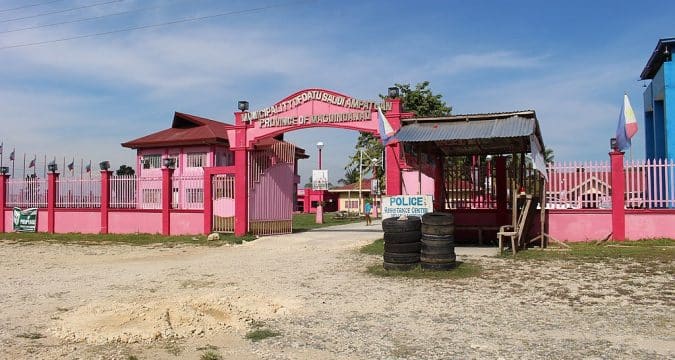
SULTAN KUDARAT (UCAN): Church-donated classrooms and water systems for indigenous peoples in Datu Saudi Ampatuan in the province of Maguindanao, Mindanao, the Philippines, were damaged by gunfire and shelling on April 25.
Fighting between two rival groups from the Moro Islamic Liberation Front [MILF] erupted on April 21, the eve of Eid al-Fitr—the end of Ramadan, breaking a peace treaty that they signed on April 5.
“We have confirmed that several [water] tanks have been badly damaged so they can’t be used by residents in local villages. It is reported that some snipers used them as cover to have a better vantage point,” Father Clifford Baira, the social action director of the Archdiocese of Cotabato, said.
Father Baira said the water system project was made possible by a donation from an international funding institution and Sunday collections from various parishes in the archdiocese.
“We made them for the farmers and their families because irrigation is poor in the area. So, we built tanks where local farmers could save water for themselves and for planting their crops, especially during the dry season,” he explained.
We have confirmed that several [water] tanks have been badly damaged so they can’t be used by residents in local villages. It is reported that some snipers used them as cover to have a better vantage point
Father Baira
A Muslim farmer, who was forced to flee because of the clashes, said the fighting factions should have considered the poor before breaking their peace pact.
“These [warrior] factions have the resources to engage in battles, to fight each other … because they have the money to buy guns and bullets. But who are the real victims here? It’s their fellow Muslims who struggle to make ends meet,” Israel Kasim, said.
Kasim said farmers in his village were living in peace when alleged members of the family of Datu Nayang Timan, one of the faction’s leaders, arrived in the village to seek shelter.
“They should not have come to civilian areas because our properties, such as the water system, were destroyed,” Kasim added.
As we celebrate the 500 years of Christianity in the Philippines. The Chaplaincy to Filipino Migrants organises an on-line talk every Tuesday at 9.00pm. You can join us at:
https://www.Facebook.com/CFM-Gifted-to-give-101039001847033
Meanwhile, several schools donated by the Catholic Church’s social arm for indigenous groups have been badly damaged in the fighting.
The roofs and walls of Padre Pio Day Care Centre and the Saint Francis School in Dapiawan town were peppered with bullets.
They should not have come to civilian areas because our properties, such as the water system, were destroyed
Israel Kasim
“They set up a camp here. They thought it was the perfect spot because it was facing the fields,” Susan Solomon, principal of day care centre explained.
Solomon said they were very fortunate because children were not present during the fighting.
“They were at home because of online classes. The situation would’ve been different if they used the school with students inside classrooms,” she added.
Lisabeth Yusop, a mother of three who had to flee her home, said her children were too scared to attend classes,
“My children should’ve been in school today. But we fear for our lives because of this conflict among fellow Muslims,” she said.
More than 11,000 people from 2,300 families have fled their homes due to the fighting while eight members from the rival groups were reportedly killed, according to the Philippine Daily Inquirer.
Meanwhile, the Philippine Army claimed that their armoured vehicles were shot at while evacuating families from the battleground, but they had no orders to engage.
“Our mission here is for humanitarian reasons. Unless there is a clear and present danger, our troops will not engage as we are part of the peace pact between the groups,” Brigadier General Donald M. Gumiran told reporters on April 25.
The conflict was triggered by contesting claims by the groups over hundreds of hectares of land in the province, where they would establish their businesses, local sources said.