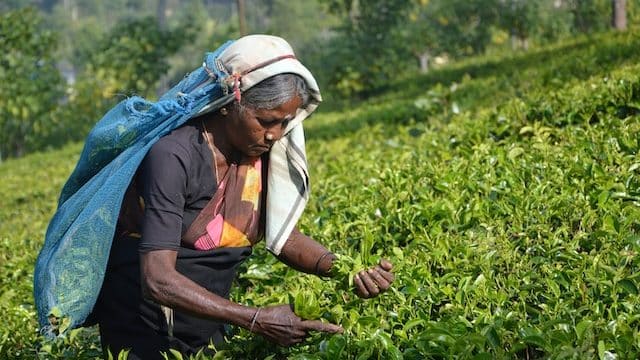
COLOMBO (AsiaNews): This year, Sri Lanka marks 200 years since the first Tamil workers were brought by British colonial authorities from southern India to the island, starting in February 1823, to work as cheap labour on plantations.
This is an opportunity for the Catholic Church in Sri Lanka to speak out against the conditions of modern slavery in which their descendants still find themselves and to ask the Sri Lankan government to take steps to guarantee them the dignity they deserve.
Malcolm Cardinal Ranjith, archbishop of Colombo, made this point at a conference held at the headquarters of Caritas Sri Lanka-SEDEC [Social and Economic Development Centre] in Borella, Colombo. Participants included Bishop Justin Gnanapragasam of Jaffna, who chairs the Commission for Justice, Peace and Human Development as well as Catholic bishops from the plantation areas of Kurunegala, Kandy, Badulla, Galle and Ratnapura.
The bishops illustrated the serious problems these communities still face in areas such as education, health, livelihoods, housing, land, and also stressed the importance of their cultural heritage.
“Two hundred years ago, plantation workers were the first victims of a type of slavery that continues today in the form of neo-colonialism,” Cardinal Ranjith said, adding, “They have not been paid proper wages and have been used as cooks without adequate housing.”
This is an opportunity for the Catholic Church in Sri Lanka to speak out against the conditions of modern slavery in which their descendants still find themselves and to ask the Sri Lankan government to take steps to guarantee them the dignity they deserve
White plantation owners, the cardinal noted, taught their culture to locals, so companies today exploit workers in the same way. What is more, the problems the latter face cannot be solved just by providing housing, repairing roads, or building toilets.
Those with power should try hard to understand how these people live, the sacrifices they make and the meagre salaries they earn. These workers should be accepted without fear as a part of the lifeline of this country, and be treated in such a way as to protect their dignity.
Speaking to the media about the conditions on the ground, the bishops said that the estates do not provide the means for Tamils to rise above the situation in which find themselves. For this reason, they renewed their call to the current government to take immediate action.
“We demand that the authorities take positive steps to ensure that they [the plantation workers] live as citizens of Sri Lanka, with the respect they deserve,” Bishop Harold Anthony Perera of Kurunegala, president of the Catholic Bishops’ Conference of Sri Lanka, said.
”A few years ago the government decided that the daily wage of plantation workers should be a thousand rupees, but those were just words,” Bishop Valence Mendis of Chilaw lamented, noting, “Some have seen their number of working days cut, so they get a pittance.”
Although most estates are privately owned, the government ought to protect the workers who live on them, the bishop added, noting that some 40,000 houses were built in the past for plantation workers, but not all of them were handed over.