Andrea was just eight-years-old, living in a small town in Zambales, the Philippines, when her parents separated. Afterward, her mother moved in with Christopher, who soon became Andrea’s stepfather. In January 2024, when Andrea turned 11, Christopher sexually abused her. Terrified of what he might do to her and her mother, Andrea kept silent.
It was not until a counselling session with her teacher that she found the courage to reveal the truth.
Her disclosure set a chain of support in motion—she was referred to the municipal social worker of Castillejos, Zambales, who brought her to the Preda Foundation’s home for abused and trafficked children.
At Preda, Andrea was welcomed, affirmed, and empowered through Emotional Release Therapy.
Gradually, she found the courage to testify in court. While Christopher denied all charges, the judge believed Andrea’s testimony. Justice prevailed: Christopher was found guilty of two counts of lascivious conduct and sentenced to a maximum of 15 years and six months in prison—a place where he could no longer harm Andrea or any other child, and where he would have time to confront his crimes.
Sadly, Andrea is not alone: thousands of children in the Philippines and around the world endure sexual, physical, verbal, and psychological abuse
Sadly, Andrea is not alone: thousands of children in the Philippines and around the world endure sexual, physical, verbal, and psychological abuse.
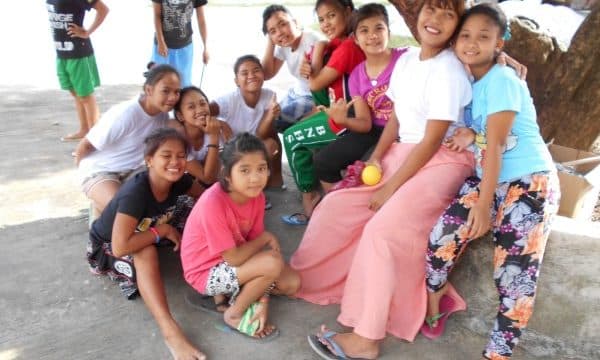
At the Preda home, an average of 60 child abuse survivors—aged six to seventeen—find safety and healing at any given time. There, they regain their self-confidence, learn to testify against their abusers, and become determined to seek justice and break free from the cycle of abuse.
Each year, these courageous children help secure an average of 20 convictions; in 2024, they achieved 27, sending a resounding message that child abuse is a heinous crime and will not be tolerated.
Over the years, hundreds of victims have seen their abusers convicted after receiving healing and empowerment at Preda.
As we celebrate the 500 years of Christianity in the Philippines. The Chaplaincy to Filipino Migrants organises an on-line talk every Tuesday at 9.00pm. You can join us at:
https://www.Facebook.com/CFM-Gifted-to-give-101039001847033
Meanwhile, across the world in the United States, a fierce public outcry has erupted over child sexual abuse committed by powerful businessmen and politicians.
The release of files and emails from convicted sex offender Jeffrey Epstein—who was found guilty of child sexual abuse and human trafficking on his private island in Florida—has exposed his close contact with high-ranking politicians and business leaders, allegedly including two presidents and a former prince. The revelations threaten to deeply embarrass and implicate some of the world’s most powerful people.
Each year, these courageous children help secure an average of 20 convictions; in 2024, they achieved 27, sending a resounding message that child abuse is a heinous crime and will not be tolerated
In response, the American public is demanding zero tolerance for child abuse—a crime that persists across all societies.
Tragically, humans are the only species known to sexually exploit their own offspring. Some individuals give in to their perverse desires, even toward their own children.
Many are fuelled by child sexual abuse material that is widely available on the internet, accessible to anyone with a mobile phone, and enabled by Internet service providers and telecommunications companies.
By failing to block harmful content and halt the livestreaming of child sexual abuse—as the law requires—these companies become complicit in crimes against children, operating without moral values or conscience.
Internet algorithms further exacerbate the problem, directing users toward more child abuse images and videos and, in some cases, motivating them to seek out and harm children themselves. These high-tech, modern-day criminals often act with impunity and, in the Philippines, seem to enjoy protection from prosecution.
Tragically, humans are the only species known to sexually exploit their own offspring. Some individuals give in to their perverse desires, even toward their own children.
Zero tolerance
Since his election on May 8, Pope Leo XIV has condemned clerical child sexual abuse and called for zero tolerance. Yet, like his predecessor Pope Francis, he finds himself stymied by those who shield abusive priests.
The pope voiced his condemnation in a statement read on June 20, during the staging of a play on child abuse in Lima, Peru—a country where he spent two decades as a missionary. The play, written by investigative journalist, Paola Ugaz Cruz, exposed the prevalence of child sexual abuse within the Catholic movement, Sodalitium Christianae Vitae.
Pope Leo expressed gratitude to Cruz and others for their perseverance, “even when they were ignored, discredited, or even persecuted in court.” As Cruz discovered, this is often the fate of journalists who dare to expose child sexual abuse.
The pope also defended independent journalists who champion human rights. “Wherever a journalist is silenced, the democratic soul of a nation is weakened,” he declared.
He described press freedom as an “inalienable common good,” insisting that the moral fight for justice by victims and journalists “is also the struggle of the Church.”
Since his election on May 8, Pope Leo XIV has condemned clerical child sexual abuse and called for zero tolerance. Yet, like his predecessor Pope Francis, he finds himself stymied by those who shield abusive priests
Pope Leo said, “It is urgent to root the whole Church in a culture of prevention that does not tolerate any form of abuse — neither of power or authority nor abuse of conscience, spiritual or sexual abuse.”
“This culture will only be authentic if it is born of active vigilance, of transparent processes and sincere listening to those who have been hurt. For this, we need journalists,” he added.
In the Philippines, many journalists have been harassed, jailed, and even killed.
According to Reporters Without Borders, 107 journalists were killed between 2003 and 2022. The Committee to Protect Journalists recorded 159 Filipino media workers killed from 1992 to 2024, while the National Union of Journalists of the Philippines reported about 199 journalist deaths since 1986.
When those in power seek to stifle or distort the truth, they often target journalists, attempting to silence or discredit them with false allegations.
It is urgent to root the whole Church in a culture of prevention that does not tolerate any form of abuse — neither of power or authority nor abuse of conscience, spiritual or sexual abuse
Pope Leo
The anniversary of the closure of the American base in Olongapo City on November 24 marks, in part, the success of a media campaign against child abuse initiated by Preda. In the 1980s, after exposing widespread child sexual abuse in Olongapo—committed by both local and United States Navy personnel and tolerated by city officials—this writer was falsely accused of defaming the city and faced a deportation trial, which was ultimately won. Preda then launched a campaign to end female and child abuse by advocating for the closure and conversion of the US bases, despite resistance from city authorities.
A 2015 study by the United Nations Children’s Fund revealed widespread violence and abuse against Filipino children, affecting some as young as three years old. About three in five respondents reported experiencing physical or verbal abuse during childhood, most often within their own homes.
The research also found that 22.4 per cent of those aged 13 to 24 had suffered some form of sexual abuse; among 13- to 17-year-olds, the figure was 17.1 per cent. Surprisingly, more boys (22.1 per cent) than girls [15.9 per cent] reported having experienced sexual violence.
The Philippines has also become a global hub for online child sexual abuse, with pedophiles—mostly foreigners—paying to watch live-streamed assaults on children. Some of these predators even travel to the Philippines to commit abuse in person.
The research also found that 22.4 per cent of those aged 13 to 24 had suffered some form of sexual abuse; among 13- to 17-year-olds, the figure was 17.1 per cent. Surprisingly, more boys (22.1 per cent) than girls [15.9 per cent] reported having experienced sexual violence
These heinous online crimes are sometimes facilitated by the children’s own parents or relatives in exchange for money.
Telecommunications companies often fail to block such criminal content, acting as though they are above the law. They resist using AI-powered filters, fearing slower internet speeds and lost profits. The convictions of foreign pedophiles in Europe and the US for crimes committed in the Philippines offer grim evidence of this crisis.
Meanwhile, thousands of abused and trafficked children endure lifelong trauma, with few ever finding justice or support.

Father Shay Cullen
www.preda.org