• Emergency hotlines for migrant workers
  • YouTube • Catholic Way
  • Online Mass
  • Chancery Notices
  • Archives
  • Support Us
  • About | Subsrcribe
  • Search
  • News
    • Hong Kong
    • China
    • Asia
      • The Philippines
      • Region
      • Middle East
    • International
      • Europe
      • The Americas
    • The Vatican
    • The Pope
  • Editorials
  • Features | Commentary
    • Reflections
    • China Bridge
    • Cullen’s corner
    • Faith and the environment
    • Human rights
    • Social justice
    • Notice Board
  • Daily Mass Readings | Sunday Homilies
    • Daily Mass readings
    • English homily
    • Tagalog homily
  • Message from our bishop
  • Search
×
Breaking News
2026-10-23 Migrants’ Day celebrated with a call to hope, unity and human dignity 2026-10-23 Working to give hope to Hong Kong’s migrant workers 2026-10-23 Holy Land Church leaders condemn settler attack on Christian village and European diplomats 2026-10-23 Four Asians appointed to International Theological Commission 2026-10-23 Singapore’s Franciscans close a centenary of jubilees 2026-10-23 Tree park inaugurated in Cebu as model for Catholic climate action 2026-10-23 The example of Blessed Fulton Sheen: preaching Christ across every medium 2026-10-23 Jesuit students from across Indonesia gather to make some noise 2026-10-23 An ancient mission of sharing Christ at a new technological frontier of AI 2026-10-23 The heart of the law
 Posted in Asia, Hong Kong, NEWS

Cardinal Stephen looks back on four years of leading the diocese, synodality and unity in the spirit

 12 December 2025
Cardinal Stephen looks back on four years of leading the diocese, synodality and unity in the spirit

Related posts:

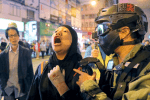
From Chile to Haiti to Hong Kong, protests appear to be sweeping the globe. Although sparked by different events, they also reflect a common frustration with economic inequality and corrupt governments, experts say. “We seem to be in the midst of people-power movements around the world,” said Maria Stephan, director of the nonviolent action program at the United States (US) Institute of Peace. “People are protesting for a variety of causes,” but some of the underlying reasons for discontent are similar, she said. One is the growing gap between the wealthiest and poorest people. “We’re in an era of peak global inequality” in which people feel “distrustful of systems that seem to be leaving them behind,” Stephan said. Another trend she calls troubling is a return to authoritarian governments in various countries. “There is a link between the backsliding of democracy and the inclination of people to take to the street and not trust as much in traditional processes and institutions,” she said. Those street demonstrations are largely organised through social media, giving them a spontaneous feel, although they often build on years of organisation and previous protest. Nevertheless, there is “a difference between quick mobilisation and sustained organisation,” she said. “It will be interesting to see whether these spontaneous protests are able to establish legs and maintain longevity and bring about reforms.” In Hong Kong, a massive demonstration on December 8 drew hundreds of thousands of people, giving ongoing unrest there new vigour. Protests erupted in June, after the Hong Kong Special Administrative Region government tried to force though a bill that would have allowed extradition of criminal suspects to mainland China, among other places. John Cardinal Tong Hon, the apostolic administrator of the Diocese of Hong Kong, was among those who called for the measure to be withdrawn. The government dropped the proposal in September, but demonstrations continued. Demands have expanded to include universal suffrage, amnesty for arrested protesters and an independent commission of inquiry. Widespread protests are new in Hong Kong, dating back only to about 2013, Maggie Shum, a research associate in the Keough School of Global Affairs at Notre Dame University, said. When Shum, who is from Hong Kong, visited the city in June and July, as the protests were gaining steam, many of those participating seemed new to street demonstrations, she said. She said that people are frustrated because Hong Kong’s electoral system does not give them a real voice in political decisions, resulting in political polarisation and a loss of trust in government. “Thinking long term, I am worried in a way about how this experience will change the next generation,” she said. At the same time, the upheaval, which the media often paint as a David-vs-Goliath struggle between the protesters and a monolithic Chinese government, may benefit groups that suffer repression in China, but lack the international spotlight made possible by Internet access. It was “never the goal for Hong Kong to be a pioneer, but it’s powerful in a sense,” Shum said. “Hong Kong is more visible (and) people are trying to use this position to raise issues of other voiceless, marginalised groups,” such as human rights activists and China’s Uyghur Muslims. Unlike Hong Kong, where the major issues are political, protesters in Latin America are calling for both political and economic reforms. That may partly reflect worries that an economic downturn in the region could send families sliding back into poverty. The region’s poverty rate has dropped dramatically in this century, from 45.4 per cent in 2002 to 27.8 per cent in 2014. But it began creeping upward again in 2015 and now stands at 30.8 per cent, according to a new report by the United Nations Economic Commission for Latin America and the Caribbean. The extreme poverty rate has also inched upward, from 7.8 per cent in 2014 to 11.5 per cent now. Protests that began in Nicaragua in April over the pension system have expanded to include demands for greater democracy and calls for the president, Daniel Ortega, to resign. In long-running protests in Venezuela, opposition demonstrators are pressing for strongman, Nicolas Maduro, to step down. Violent protests that broke out in Bolivia over accusations of election fraud caused its president, Evo Morales, who had claimed victory in a controversial re-election bid, to flee to Mexico. Other officials in the line of succession resigned, sowing confusion that has underscored the country’s political polarisation. In Ecuador, the elimination of fuel subsidies as part of an economic adjustment deal with the International Monetary Fund sparked protests in October that forced the government to backpedal. Ongoing protests in Chile were touched off in early October by a transit fare hike, but they expanded to include demands for more equitable health care and education, as well as increases in the minimum wage and education. The government of the president, Sebastian Pinera, made some concessions and agreed to hold a referendum in April 2020 on whether to rewrite the constitution. In the streets, however, security forces cracked down sharply with tactics reminiscent of the dictatorship of General Augusto Pinochet. New government policies in support of such measures are cause for concern, sociologist Cristian Montenegro of the Pontifical Catholic University of Chile in Santiago, said. Colombians took to the streets in late November to protest plans to cut labour benefits and pensions, but the demonstrations also reflect discontent with the president, Ivan Duque, and concerns over a resurgence in violence. In the Caribbean island nation of Haiti, protests that have roiled urban areas since November are subsiding, but many parents still feel it is not safe to send their children to school, Christopher Bessey, Haiti country director for Catholic Relief Services, said. Protests began in mid-2018, when the government eliminated fuel subsidies, sending gas prices soaring. That was followed by indignation over a corruption scandal involving reduced-price oil from Venezuela, in which the funds saved, which were to be invested in social services, disappeared. Demonstrators began calling for the resignation of the president, Jovenel Moise. As protests escalated, demonstrators set up roadblocks, bringing transport to a standstill, Bessey recounted. Workers could not get to their jobs, farmers were unable to send products to urban markets and sick Haitians could not reach hospitals. “The people who are really suffering in this are not the politicians, not the business community, it’s the people on the margins and the people who are dependent on a functioning economy for the few who do have work,” Bessey said. Although the situation has been calmer in recent days, protests could flare again in early 2020, when elections are scheduled. Demonstrations sweeping the Middle East echo a wave of protests in 2011 that raised hopes for more responsive governments. Those expectations were never fully satisfied, however, and the protests against corrupt leaders and economic inequality have flared again. Protests have forced the prime ministers of Lebanon and Iraq out of office. Egypt saw a month of protests, beginning in mid-September, when a defense contractor living in exile accused the president, Abdel Fattah el-Sissi, and people close to him of corruption. Security forces arrested nearly 3,000 people during the demonstrations, which also reflected frustration with an economic recovery that was not trickling down, experts say. In Iraq, the largest protests since dictator, Saddam Hussein, was ousted in 2003 began in early October over corruption, poor public services and a lack of jobs. Security forces responded with tear gas and live ammunition, leaving more than 300 people dead and at least 8,000 injured, according to human rights groups. As the demonstrations continued, the protesters began to demand an overhaul of the country’s political system. Observers say Iranian infiltration of the protests has complicated the situation, because Iran, a close ally of the Iraqi government, has an interest in quashing the protests. Meanwhile, the Iranian government has cracked down on protesters demonstrating over rising fuel prices, which are related to tightening US sanctions against the country. Pope Francis has called for dialogue in Iraq and expressed sorrow for the deaths of protesters there. “I was saddened to learn that the protests in recent days have been dealt with harshly, leading to the death of dozens of victims,” he said during the Angelus prayer December 1. In Lebanon, tax measures set off protests in mid-October, with demonstrators also decrying corrupt government and calling for political and economic reforms. Nearly two weeks later, the prime minister, Saad Hariri, announced his resignation. Women in Lebanon have also seized the moment to protest sexual violence, from harassment to assault. That is part of another protest trend that is spreading around the world, reflected in a massive street performance that began in Chile with a chant called “the rapist in your path.” Groups of women have gathered to repeat it in countries around Latin America and Europe. The street performance, the brainchild of a Chilean feminist collective, struck a chord in Latin America, where more than 3,500 women were murdered last year, many by a current or former husband or boyfriend. Throughout Latin America, street protests reflect “a sense that structural changes are needed,” Montenegro said. Although the process will be slow, he added, “a seed is being planted that will continue to grow.” CNS

Protests reflect world frustration with inequality and corruption

2019-12-20
Features | Commentary
Killing of Filipino journalist sparks uproar

Killing of Filipino journalist sparks uproar

2022-10-14
Commentary
Japan’s campaign to help exploited foreigners backfires

Japan’s campaign to help exploited foreigners backfires

2021-07-09
Asia
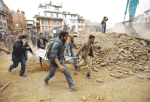
At least 119 dead as earthquake jolts Nepal

At least 119 dead as earthquake jolts Nepal

2023-11-10
Asia

Share this:

  • Share on Facebook (Opens in new window) Facebook
  • Share on X (Opens in new window) X

Related Articles

___________________________________________________________________________
Share:
Tagged Cardinal Stephen Chow SJ, Hong Kong

Post navigation

← Choose genuine encounter over AI simulation, speaker urges at conference in Hong Kong
Mass in honour of Our Lady of Guadalupe →

Keywords

Cardinal Stephen Chow Cardinal Stephen Chow SJ Caritas Catholic Catholic Church children China climate change community Covid-19 Daily Mass readings dialogue Easter Editorial English Homily Environment faith front page top Hong Kong human rights India Indonesia justice Mass readings Myanmar Notice Board peace Philippines Pope Francis Pope Leo Pope Leo XIV reflections reflections from the bishop and vicars general SARS-CoV-2 spiritual reflections synodality Tagalog homily the Church The Philippines the pope The Vatican Ukraine Vatican war Young people

Pope’s latest news and videos

Pastoral messages from our bishop

Reflections from our and bishop and the vicars general

Online Mass _ the Cathedral of the Immaculate Conception

Vatican-Live video feed

Vatican Live video feed

Daily Mass Readings

Jubilee Prayer 2025

Search

Download this week’s Sunday Examiner

Download this week’s issue
Published: 16 October 2026
Click to download

Link to Dilexit Nos

Pope’s latest news and videos

Download this week’s issue

Sunday Examiner, 18 October 2026

Published: 16 October 2026
Click to download498 Downloads

Copyright © Sunday Examiner, the Catholic Diocese of Hong Kong

Design by ThemesDNA.com