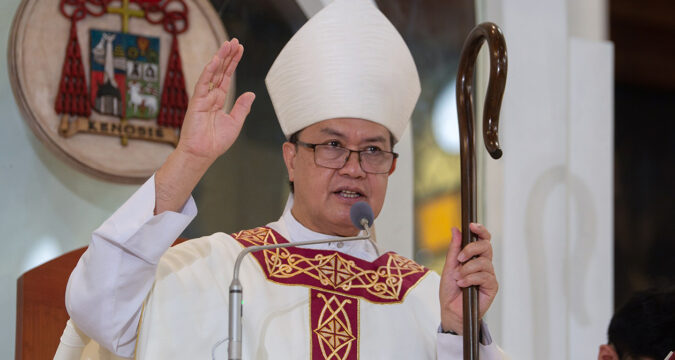
MANILA (UCAN): Pablo Virgilio Cardinal David, the bishop of Kalookan, the Philippines, joined opposition politicians and civil society groups in criticising a proposed government health assistance programme, warning it would entrench patronage politics and make poor patients dependent on lawmakers.
“The proposal sounds compassionate on paper, but in practice it is nothing but a health pork barrel in the national budget,” Cardinal David said in a statement posted on social media on December 14.
The cardinal, who just completed his term as president of the Catholic Bishops’ Conference of the Philippines [CBCP], said that the proposed Medical Assistance to Indigent and Financially Incapacitated Patients [MAIFIP] programme for 2026 amounted to a “health pork barrel” despite being presented as a compassionate initiative.
He said the programme would operate primarily through a system of guarantee letters, under which access to medical aid would depend on securing endorsements from legislators.
“This effectively places politicians in control of who gets assistance, how much, and when,” he said.
Cardinal David, a prominent advocate for human rights, noted that the programme’s proposed allocation had nearly doubled, from about US$413 million to US$874 million, to allow lawmakers to distribute medical assistance.
This effectively places politicians in control of who gets assistance, how much, and when
Cardinal David
The cardinal warned that such an arrangement transforms healthcare from a right into a political favour.
“Healthcare is no longer delivered as a right flowing from need and citizenship, but as a favour mediated by political power—a classic system of patronage that turns illness into utang na loob [a debt of gratitude],” he said.
Patronage politics has long been cited as a driver of corruption in the Philippines and as a factor sustaining political dynasties.
As we celebrate the 500 years of Christianity in the Philippines. The Chaplaincy to Filipino Migrants organises an on-line talk every Tuesday at 9.00pm. You can join us at:
https://www.Facebook.com/CFM-Gifted-to-give-101039001847033
Cardinal David and other Church leaders recently spoke out against the practice as part of a broader campaign to combat corruption in the country, which regularly ranks among Asia’s most corrupt.
Thousands of Filipinos and civil society groups joined Church-backed anti-corruption protests between September 21 and November 30.
Healthcare is no longer delivered as a right flowing from need and citizenship, but as a favour mediated by political power—a classic system of patronage that turns illness into utang na loob [a debt of gratitude
Cardinal David
Cardinal David, who was elevated to the College of Cardinals last year and led the CBCP until November 30, urged policymakers to pursue “a better and more honourable path” toward universal healthcare.
“When access to healthcare, education, or emergency assistance depends on a politician’s endorsement, a guarantee letter, or personal intervention, something deeply wrong has taken root—not only legally, but morally,” he said.
Health policy analysts echoed the concerns.
Ken Abante, co-convenor of the People’s Budget Coalition, said the proposed programme would worsen patronage practices. “Health is supposed to be a right,” he said. “People shouldn’t have to line up before politicians and beg for help.”
Health reform advocate, Tony Leachon, said the initiative would undermine, rather than strengthen, the country’s Universal Health Care law, which aims to provide “automatic, rules-based access” to medical services through the state insurer, PhilHealth.
“The law envisions no gatekeepers, no endorsements, no politics,” Leachon said. However, the proposed programme “creates a parallel, discretionary system” where access depends on influence.