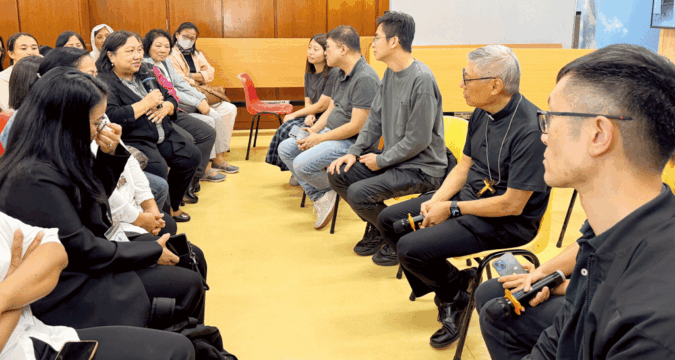
HONG KONG (SE): “Sometimes when we suffer, we don’t know how to express it in words, but our bodies speak through symptoms of trauma,” said Cardinal Stephen Chow, S.J., during a Mass at Immaculate Heart of Mary Church in Tai Po on December 21. He voiced concern that the psychological impact of the tragic fire at Wang Fuk Court on November 26 might remain unrecognised among survivors and those affected.
The Mass was followed by a sharing session, mainly for the English-speaking community, involving Catholic medical practitioners and Caritas social workers, who are preparing support programmes to address emotional and psychological needs arising from the tragedy. Prior to this, on November 30, Cardinal Stephen had visited members of the Chinese-speaking community in Tai Po to listen to their concerns and needs.
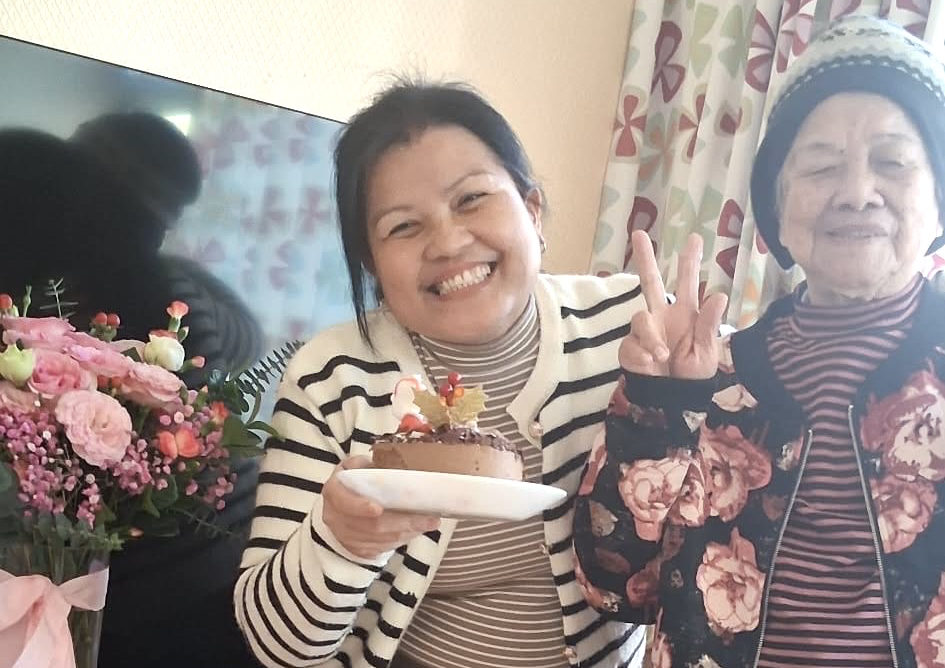
According to parish secretary, Polly Chan, at least nine active parishioners lost their lives in the fire. Among them were two elderly women in their seventies, a family of two, a pianist who frequently served at parish Masses, two individuals in their thirties, and two foreign domestic workers.
Before lighting the fourth Advent candle, Cardinal Stephen invited the congregation to pray for those who had died and for all who had lost hope. In his homily, he reflected on the Sunday gospel, highlighting St. Joseph’s righteousness in supporting Mary and emphasising that authentic faith involves openness to God’s plan.
According to parish secretary, Polly Chan, at least nine active parishioners lost their lives in the fire. Among them were two elderly women in their seventies
He encouraged the faithful to hold on to hope amid suffering, noting that God, too, must be heartbroken in the face of such a tragedy.
Following an English Mass for migrants, Cardinal Stephen, parish priest, Immaculate Heart of Mary Father Jean Sylvere Mbuela Pfuti, Catholic medical practitioners and Caritas social workers listened to testimonies from those directly affected and other parishioners.
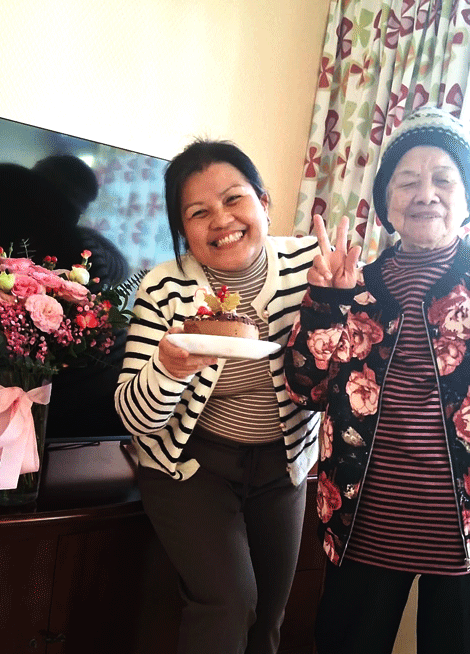
One of them, Jonalyn Buran, a domestic worker living at Wang Fuk Court, recounted how she and the elderly woman she cares for were alerted to the fire by a family member in Canada who had seen the news.
Panicking, she gathered essential items—her phone, identity card and the elderly woman’s heart medication—and chose to take the lift rather than the stairs, as her charge was unable to descend quickly from the 23rd floor.
They escaped just in time, as flames spread to their building within 10 to 15 minutes. “What if I had taken the stairs?” she recalled, still shaken.
During the one-hour sharing session, other migrants and local residents also expressed their distress and sorrow. One Filipino worker shared that the incident resurfaced memories of a devastating typhoon in her home country that had once left her family with nothing
Although she survived, Jonalyn now suffers from severe emotional distress, including anxiety and sleeplessness, which led her to seek hospital care. She noted that such trauma is not always understood, especially when survivors are considered “lucky.” The elderly woman she looks after continues to weep when recalling the incident. Both are currently staying in temporary accommodation.
Despite attending a stress debriefing session, Jonalyn said that speaking about her trauma remains difficult.
During the one-hour sharing session, other migrants and local residents also expressed their distress and sorrow. One Filipino worker shared that the incident resurfaced memories of a devastating typhoon in her home country that had once left her family with nothing.
Community response and support initiatives
Chan Wai-leung, a Caritas social worker, said Caritas plans to establish a one-stop support service in collaboration with Catholic doctors, combining medical and psychosocial care to help residents process their experiences and cope with emotional difficulties. The service will initially be launched in Tai Po, with hopes of extending it to other districts.
God does not want what happened, and he will not leave us alone
Sister Victoria Victorino
Caritas has also set up a hotline at 9688 7760 for those affected by the fire, with support available in Indonesian. Assistance can also be sought via WhatsApp.
Sister Victoria Victorino, assistant director of the Diocesan Pastoral Centre for Filipinos, said that three migrant survivors had approached the centre for help and were subsequently included in debriefing sessions with around 30 others. These sessions, organised by the Philippine Consulate and supported by agencies such as the Red Cross and volunteer psychologists, aimed to help participants identify their emotions and build resilience through storytelling and mutual support.
She observed that many survivors displayed trauma symptoms such as trembling and insomnia, while continuing to work under difficult living conditions. Distress was further aggravated by people treating the fire site as a “photo-taking spot” and by insensitive remarks about compensation. In some cases, employers of survivors are themselves traumatised, limiting their ability to offer support.
Sister Victorino emphasised the importance of faith in the healing journey. “It is precisely in times of trial that the Lord reveals himself,” she said. “God does not want what happened, and he will not leave us alone.”
She suggested that the wider community can help by giving survivors time to recover, without imposing expectations. Listening attentively—without rushing to give advice—can be healing if survivors choose to share. Gentle encouragement may help others to express their pain, even though doing so may involve revisiting painful memories as part of the healing process.