
Ambrose Mong
International Workers’ Day on May 1 has become a global symbol of workers’ solidarity and rights. It serves as a reminder of the exploitation of workers in the past and the ongoing struggle for fair wages, safe working conditions, and social justice. The day is officially recognized as a public holiday in many parts of the world, including Hong Kong and mainland China.
China’s labour
In China, Workers’ Day—locally known as Labour Day [劳动节], carries significant historical, political, and social meaning. Officially, the day is celebrated with ceremonies honouring “National Model Workers” [
全国劳动模范], where factory workers, farmers, administrative staff, and scientists are recognized and receive awards for their contributions to national development. This tradition underscores the Chinese Communist Party’s ideological commitment to the working class.
The Workers’ Day serves as a reminder of the dignity of labour. The slogan “Labour is the Most Glorious” [
劳动最光荣] aligns with socialist values, affirming that all workers—including intellectuals—form the foundation of China’s economic progress and social development, as well as the realization of the “Chinese Dream.”
In recent years, the Chinese government has leveraged the long weekend holiday to boost domestic consumption, a phenomenon known as “spending holidays” [假期消费]. Citizens are encouraged to travel and shop, reflecting China’s transition from an industry-driven economy to a consumer-driven one.
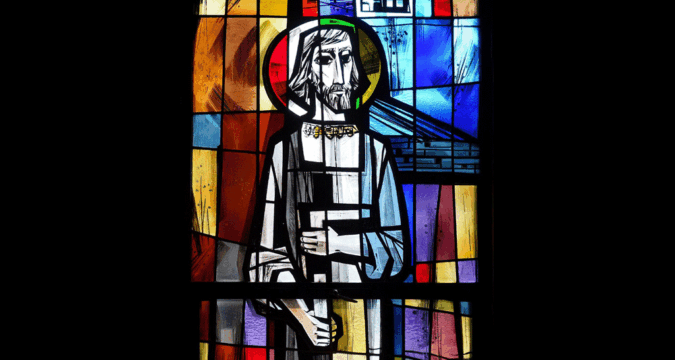
From a Catholic perspective, International Workers’ Day [May 1] offers an opportunity to reflect on the dignity of work, the rights of workers, and the social teaching of the Church. On May 1, we celebrate St. Joseph the Worker, a feast instituted by Pope Pius XII in 1955, which offers a Christian understanding of labour as a path to holiness and a way to glorify God
From a Marxist perspective, International Workers’ Day symbolizes proletarian solidarity against exploitation, uniting Chinese workers with their global counterparts under the famous call from the Communist Manifesto [1848]: “Workers of the world, unite!”
In summary, International Workers’ Day in China honours the working class as the backbone of the country’s economic progress, reinforces socialist values, and promotes domestic consumption—all under the stewardship of the Chinese Communist Party.
Church’s teaching
From a Catholic perspective, International Workers’ Day [May 1] offers an opportunity to reflect on the dignity of work, the rights of workers, and the social teaching of the Church. On May 1, we celebrate St. Joseph the Worker, a feast instituted by Pope Pius XII in 1955, which offers a Christian understanding of labour as a path to holiness and a way to glorify God.
The dignity of human labour lies in its participation in God’s creative work. Through work, we exercise our God-given talents, provide for our families, and contribute to the common good. This vision is reflected in the Book of Genesis, where Adam is called to “till and keep” the garden [Genesis 2:15].
Having a spiritual dimension, work participates in God’s creative action. Workers have rights, including fair conditions, just treatment, and the right to form unions
In his encyclical Rerum Novarum [1891], Pope Leo XIII teaches that the economy must serve the human person. Its core ideas include the dignity of labour, the right to private property, a just wage, the right of workers to organize, and the duty of the state to protect the poor and vulnerable.
Pope John Paul II’s Laborem Exercens [1981] focuses on the dignity of human work and the priority of the person over economic systems. He teaches that work is for the person, not the other way around; that labour has moral and spiritual value, not merely economic value; and that it takes precedence over capital, people matter more than profit.
Having a spiritual dimension, work participates in God’s creative action. Workers have rights, including fair conditions, just treatment, and the right to form unions.
The Church is critical of both Marxism and capitalism when they reduce workers to commodities.
Workers’ Day also calls for solidarity with the poor and exploited, and for economic structures shaped by subsidiarity, so that decisions affecting workers involve them as much as possible rather than being imposed from above.
Pope Francis speaks of “bad work” that denies human dignity, especially employment that leads to exploitation and social disruption. He calls for dialogue and solidarity to address unemployment, inequality, and labour insecurity
While rejecting Marxist class struggle, Catholic teaching condemns exploitative capitalism, unjust working conditions, and the idolatry of the market. Unions that advocate justice for workers are in harmony with the Church’s prophetic mission.
Pope Francis speaks of “bad work” that denies human dignity, especially employment that leads to exploitation and social disruption. He calls for dialogue and solidarity to address unemployment, inequality, and labour insecurity.
In this way, Francis continues Catholic social teaching, applying it to a post-industrial and globalised economy. In Fratelli Tutti, he connects labour to fraternity by emphasising that a truly humane society must secure dignified work for all.
He treats work not merely as an economic issue, but as a test of whether society upholds solidarity, inclusion, and social friendship. For him, labour is intrinsically tied to fraternity. The poor need more than charity; therefore, society must change its structures to ensure that people can find work and sustain themselves1.
Pope Leo XIV has made the dignity of work and the moral implications of artificial intelligence central themes of the opening phase of his papacy.
While rejecting Marxist class struggle, Catholic teaching condemns exploitative capitalism, unjust working conditions, and the idolatry of the market
He deliberately adopted the name “Leo” as a tribute to Pope Leo XIII, who authored the landmark 1891 encyclical Rerum Novarum—the document that laid the foundation for contemporary Catholic social doctrine on labour rights amid the First Industrial Revolution
By placing Workers’ Day under the patronage of St. Joseph, a humble carpenter and foster father of Jesus Christ, the Church elevates labour, showing that holiness is attainable through ordinary work.
From a Catholic perspective, International Workers’ Day becomes a time to pray for workers, honour their contributions, and remember Christ himself, who lived as a worker and servant.
May Day as dialogue
International Workers’ Day, whether seen through the Church’s social teaching or China’s socialist tradition, affirms the centrality of human labour in shaping society and humanity.
China emphasises work as the foundation of national progress, while the Church elevates it as participation in God’s creative action. By honouring workers, we are reminded that true progress depends on valuing people above profit.
1 See “Pope Francis: Encounter with World of Work,” https://opusdei.org/en/article/pope-francis-encounter-with-the-world-of-work/ and “Pope sends message for Social Week on the dignity of work,” https://www.vaticannews.va/en/pope/news/2017-10/pope-sends-message-for-social-week-on-the-dignity-of-work.html.