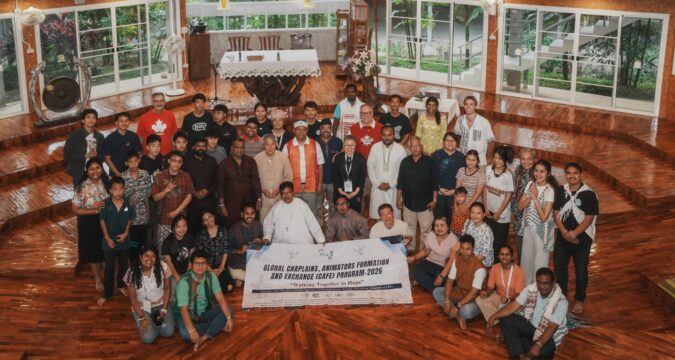
CHIANG MAI (LiCAS News): Pax Romana-International Movement of Catholic Students adopted the Chiang Mai Declaration 2026 at the close of its Global Chaplains, Animators Formation and Exchange programme, held in northern Thailand from July 12 to 20.
Titled “Walking Together in Hope,” the declaration committed its leaders to respond to poverty, migration, conflict, environmental degradation, and digital transformation affecting young people.
The declaration placed the accompaniment of young people at the centre of the movement’s mission. It called on chaplains, lay animators, and student leaders to promote Catholic social teaching, strengthen leadership formation, and foster greater collaboration across the movement.
Participants also prepared regional action plans and contributed to an IMCS pastoral handbook intended to support campus ministry and Catholic student movements in different countries.
The gathering brought together 44 chaplains, animators, student leaders and collaborators from Asia, Africa, Europe and North America. Others joined online.
The true accomplishment of Global CAFE will not be measured by this week in Chiang Mai, but by what we do on our campuses, in our National Movements and local communities in the coming years
William Nokrek
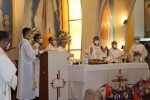
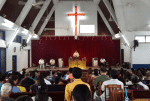
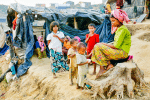
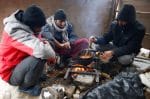
The programme included prayer, Eucharistic celebrations, workshops, community immersion, dialogue and action planning. Participants examined challenges facing students and young adults, including poverty, migration, conflict, ecological destruction and rapid changes in digital technology.
William Nokrek, international president of Pax Romana IMCS, said the programme was intended to strengthen those who accompany young people.
“We started Global CAFE with one belief: if we want better Catholic student movements, we have to better equip those who walk with young people,” Nokrek said, adding that the gathering’s impact would depend on how participants applied its lessons after returning home.
“The true accomplishment of Global CAFE will not be measured by this week in Chiang Mai, but by what we do on our campuses, in our National Movements and local communities in the coming years,” he said.
In a message to participants, Kevin Cardinal Farrell, prefect of the Vatican Dicastery for Laity, Family and Life, said the Church must help young people discover lives of purpose rooted in Christ.
… if we want better Catholic student movements, we have to better equip those who walk with young people…
Nokrek
“Young people are not drawn to small things, but only to great ideals, great truths, and great missions,” Cardinal Farrell said.
He said young people need mentors who can listen to their struggles and aspirations rather than leaders concerned only with competence or appearances.
“Young people are not looking for perfect, flawless role models, nor are they looking for leaders who merely possess organisational skills,” Cardinal Farrell said.
The cardinal said young people seek authenticity, closeness, and attentive companions who can listen to their desires, hidden struggles, difficulties, and aspirations.
Sebastian Cardinal Francis of Penang urged participants to interpret contemporary realities through the gospel and Catholic social teaching.
Young people are not drawn to small things, but only to great ideals, great truths, and great missions
Cardinal Farrell
“The strength of IMCS Pax Romana as a ‘global’ movement depends on your deep formation—your ability to read the signs of the times and to interpret them in the light of the gospel and Catholic Social Teaching,” Cardinal Francis said.
He called on participants to become “missionary and digital disciples” who bring their faith into campuses, public life, and online spaces.
“Fill these spaces with stories shaped by the Holy Spirit—stories that witness to truth, hope, and love, even within the digital sphere and its algorithms,” he said.
“The world needs your missionary zeal and witnessing,” he said.
Pax Romana IMCS was founded in 1921 and is present in more than 75 countries. The movement works with Catholic students in higher education through faith formation, leadership development, advocacy, intercultural dialogue and service.