Father Shay Cullen
On September 1, Pope Leo XIV opened the Season of Creation and warned that war and environmental degradation are driving a “vicious cycle” of ecological destruction, poverty, and further conflict in the world. War against the environment, against people, and against creation is destroying habitats and lives. We do well to heed Pope Leo’s words: “War also leaves behind social and ecological destruction that endures for generations.”
There is a long-running war in the Philippines, waged by three super-rich mining corporations in Palawan against the Filipino people and God’s creation there.
The firms plan to cut down more than 188,765 primeval trees, with permits issued by the Department of Environment and Natural Resources (DENR). This environmental impact appears to be proceeding without the approval from the country’s president, Ferdinand Marcos Jr.; however, responsibility for addressing it ultimately lies with the administration.
Ongoing open-pit mining operations are being compared to environmental crime scenes, as mining companies, with DENR approval, plan to wreak further devastation. The nickel ore extracted from these operations provides little benefit to the Filipino people.
War also leaves behind social and ecological destruction that endures for generations
Pope Leo XIV
Some entities receive 90 per cent of the raw ore exports to manufacture stainless steel and batteries, which are then sold back to the Philippines. The remainder is exported to other Asian companies.
The Filipino people receive no benefit because corrupt officials divert the funds earned when the mining companies pay taxes.
The destruction of Philippine rainforests deprives every Filipino and environmentalist of these magnificent natural wonders, their wildlife, and their protective climate cover.
The trees targeted by mining companies with DENR permits are not protected by the moratorium passed by the Palawan provincial government in March 2025.
As we celebrate the 500 years of Christianity in the Philippines. The Chaplaincy to Filipino Migrants organises an on-line talk every Tuesday at 9.00pm. You can join us at:
https://www.Facebook.com/CFM-Gifted-to-give-101039001847033
Dennis Socrates, the governor, led the provincial government in declaring a 50-year moratorium on all new pending mining applications in Palawan under Provincial Ordinance 3646. This measure is designed to safeguard the rainforests’ unique status as the only original old-growth rainforest in the country.
The destruction of Philippine rainforests deprives every Filipino and environmentalist of these magnificent natural wonders, their wildlife, and their protective climate cover
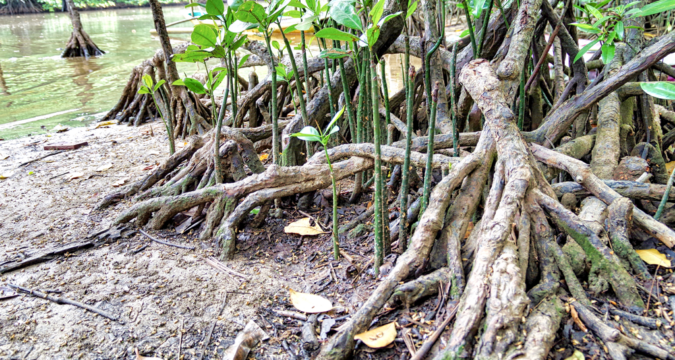
Palawan, which also boasts vast mangroves and coral reefs, is described as the “last ecological frontier”. However, mining firms are expanding their open-pit or surface mining operations, cutting millions of trees in the process.
Bishop Broderick Pabillo of Taytay urged religious leaders to take a stand to protect the forests, speak out against environmental destruction, and called on the people to save Creation.
Palawan as a whole was designated a United Nations Educational, Scientific and Cultural Organisation Man and Biosphere Reserve in 1990 and is revered worldwide as a rare habitat for species found nowhere else on Earth.
Its forests are home to rare and unique species, such as the Palawan bearcat, the Palawan pangolin, and the majestic Manggis tree. These forests have an immense capacity to absorb carbon dioxide, slow climate change, and protect the nearby marine life in the Coral Triangle. Indigenous communities have lived in Palawan for millennia.
Palawan as a whole was designated a United Nations Educational, Scientific and Cultural Organisation Man and Biosphere Reserve in 1990 and is revered worldwide as a rare habitat for species found nowhere else on Earth
Environmental villains
Several major business interests are now seeking to expand their operations, a move that environmental advocates warn will result in further deforestation and habitat loss. Environmental groups point out that massive swathes of primary forest and ancestral land have already been cut down and cleared.
In Berong, the DENR has authorised the cutting of an additional 26,617 trees in one instance. As with the flood-control corruption scandal, there are allegations of corruption. Bishop Pabillo said reforestation was “a big lie.” Tree nurseries and seedlings cannot replace a thousand-year-old primaeval rainforest.
The Rio Tuba Nickel Mining Corp. (RTNMC) and Ipilan Nickel Corp. are among the companies contributing to deforestation in Palawan. RTNMC is the oldest and largest subsidiary of Nickel Asia Corp., which holds a controlling 60 per cent equity stake in the company. They also own 65 per cent of Taganito, and 100 per cent of the Cagdianao, Hinatuan, and Dinapigue operations. Ipilan operates in Brooke’s Point in southern Palawan and plans to cut down 60,359 trees. Berong Nickel Corp., operating in Aborlan in central Palawan, is planning to cut down 71,405 trees.
Some individuals working at these companies may be unaware of the long-term environmental and social consequences of these activities.
The destruction of the Philippines’ rainforests, along with the loss of wildlife and rare species and damage to marine life, represents a significant environmental crisis for both nature and the Filipino people. These activities offer little benefit to the population and may leave behind a degraded landscape, with the loss of trees, flowers, animals, and people’s natural heritage.
The destruction of the Philippines’ rainforests, along with the loss of wildlife and rare species and damage to marine life, represents a significant environmental crisis for both nature and the Filipino people
This environmental crime scene is made possible by the DENR, which has granted these companies special tree-cutting and earth-balling permits to make room for open-pit mining operations. These operations are supported by 25-year national mineral production sharing agreements handled by the Mines and Geosciences Bureau.
The mining companies are required to obtain an environmental compliance certificate to ensure adherence to ecological laws, free, prior, and informed consent from Indigenous communities if the mining area overlaps with ancestral domains, and local government unit endorsement from the host community.
These requirements have not been met, according to local Church groups and networks like the Save Palawan Movement and Alyansa Tigil Mina. These groups have bravely stood with Indigenous peoples and have launched major campaigns exposing corrupt government-approved permits. They are fighting to block the special tree-cutting and earth-balling permits that threaten to clear over another 218,000 trees across Brooke’s Point, Bataraza, and Aborlan.