UIJEONGBU (UCAN): A group of 30 lay people and clergy from South Korea, led by the National Reconciliation Committee of the Diocese of Uijeongbu made a “pilgrimage of reconciliation and peace” to Japan from April 25 to 28.
The delegation visited several places, including Fukuoka, Yamaguchi, and Hiroshima, which have memorial sites related to the Japanese occupation and persecution of Koreans.
Bishop Peter Lee Ki-heon of Uijeongbu, the chairperson of the Korean bishops’ Special Commission for the Reconciliation of the Korean People joined the delegation along with members of the Civil Reconciliation Committee.
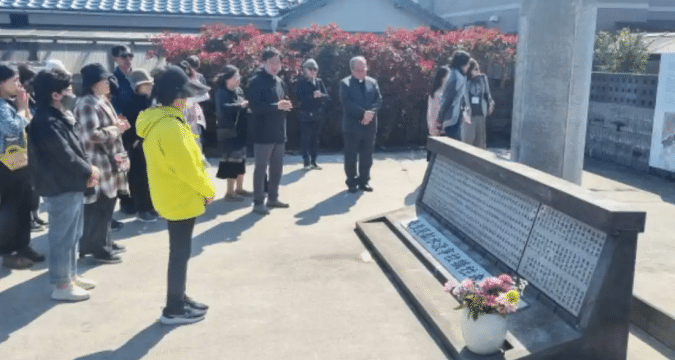
They prayed together and paid tribute to those who lost their lives due to oppression.
Japanese Jesuit Father Nakai Jun and a young Japanese Catholic accompanied the Korean visitors during their pilgrimage.
The pilgrims paid visits to Dunggul Village, a slum where Koreans who failed to return to Korea after the end of the Japanese occupation lived together. They also visited Kanmon Ferry Dock in Fukuoka, which was used to bring Korean slave labourers to work in Japanese factories and mines.
I want to apologise for the suffering of many Koreans during the Japanese colonial period and for the division of the Korean Peninsula due to the war initiated by Japan
Bishop Shirahama
The group prayed and paid floral homage to Koreans who lost their lives in dangerous working conditions at Josei Coal Mine.
They also visited Yamaguchi Elementary and Intermediate School where Korean students studied amid poor conditions, enduring discrimination from the Japanese government and local communities for a long time, such as being excluded from free high school education in Japan.
On April 27, the group participated in a special Mass for peace and reconciliation at the Assumption of Mary Cathedral in Hiroshima.
During his homily, Bishop Alexis Shirahama Mitsuru of Hiroshima apologised for the atrocities committed by Japanese colonial forces against the Korean people.
“I want to apologise for the suffering of many Koreans during the Japanese colonial period and for the division of the Korean Peninsula due to the war initiated by Japan,” Bishop Mitsuru said.
The bishop then expressed solidarity for peace, saying, “I will join the prayer for peace on the Korean Peninsula every evening at nine.”
After the Mass, Bishop Lee and Bishop Mitsuru shared in-depth ways to overcome the past and promote solidarity between the Churches in Korea and Japan.
The pilgrimage group paid their respects at the Korean Atomic Bomb Victims Memorial and also visited the Xavier Memorial Church.
“I was able to once again take in the history of our people who suffered from forced mobilisation during the Japanese colonial period, and at the same time, I was able to see Japanese peace activists who were reflecting on past mistakes and opposing current injustice,” Bishop Lee said.
“It was an opportunity to realise the meaning and practice it,” he added.
Japan occupied the Korean Peninsula from the end of the Joseon Dynasty (1392 to 1897) until the end of World War II.
This report is brought to you in partnership with the Catholic Times of Korea