MANILA (LiCAS News): Human rights lawyer Antonio “Tony” La Viña argued that a deadly military operation on April 19 in the Philippines and the ongoing conflict in the Middle East do not meet the standards of a “just war,” describing them as unjust and devastating for civilians.
In reflections published on April 23, La Viña posed the question: “When, if ever, is war just?” He concluded that neither conflict meets the conditions of just war, failing tests of last resort, civilian protection, and proportionality.
He added, “These are unjust wars, and the price is being paid in human lives.”
La Viña cited the escalation after the February 28 US and Israeli strikes on Iran, noting that “thousands have been killed in the weeks since” and “millions more have been displaced from their homes and communities.”
He argued modern warfare rarely fulfills the strict requirements to justify armed conflict, echoing the view that war is “not a solution but a catastrophe with no winners.”
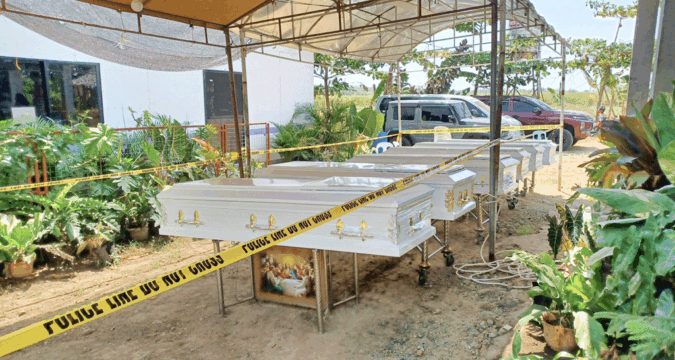
He applied the same standard to the April 19 military operation in Salamanca village, Toboso town in Negros Occidental province, where 19 people were killed in what authorities called an encounter with the New People’s Army.
The operation, lasting nearly 12 hours, displaced at least 653 residents, many of whom sought refuge in schools.
Among the dead was RJ Nichole Ledesma, a community journalist documenting the plight of farmers and marginalised groups.
Independent reports say Ledesma was not at the clash site but was killed in a separate community during pursuit operations.
As we celebrate the 500 years of Christianity in the Philippines. The Chaplaincy to Filipino Migrants organises an on-line talk every Tuesday at 9.00pm. You can join us at:
https://www.Facebook.com/CFM-Gifted-to-give-101039001847033
A just peace is not merely the absence of gunfire. It is the presence of justice in land, labour, and livelihood, participation in governance, truth-telling and accountability, the healing of historical wounds, and the restoration of human dignity
Bishop Alminaza
La Viña also cited the killing of a University of the Philippines Diliman student leader who was in the area to learn firsthand about militarisation and land dispossession.
“Both were doing what a free and just society must protect,” he said.
He rejected the view that the operation was legitimate counterinsurgency, writing, “Their killings were not accidents. They were consequences of systematic red-tagging and unchecked state violence.”
He added, “Militarisation has not brought peace to Negros, or to Mindanao. It has deepened poverty and silenced dissent. That is not counterinsurgency. It is terror. And it must be named as such, clearly and without qualification.”
In a separate reflection, Bishop Gerardo Alminaza of San Carlos stressed the incident should not be reduced to numbers: “19 lives were lost in a single armed encounter, human beings, not statistics.”
He said the conflict “did not begin with guns” but with “landlessness in a land of vast haciendas” and “entrenched poverty in communities surrounded by wealth.”
Warning of a recurring pattern, the bishop said, “violence answers violence,” displacing communities and deepening grievances. “This is not victory. This is collective failure.”
La Viña echoed this view, noting that military force does not resolve root causes. “Violence only feeds the next cycle of grief and retaliation.”
In a pastoral letter, Bishop Alminaza called for a shift away from armed responses toward a “just peace.”
He said, “For generations, societies have tried to justify violence under certain conditions. Today, the scale and persistence of suffering demand a more urgent question: what would it mean to build a just peace?”
Bishop Alminaza said, “A just peace is not merely the absence of gunfire. It is the presence of justice in land, labour, and livelihood, participation in governance, truth-telling and accountability, the healing of historical wounds, and the restoration of human dignity.”
La Viña argued these conflicts are unjust, their cost measured in human lives—journalists, students, farmers, and families whose identities must not be reduced to statistics.
“Moral clarity demands that we say what these wars are. They are failures of leadership and failures of imagination. Peace is not weakness. It is the only path that has ever worked,” he added.