Father Shay Cullen
Each day, when we wake up, see the new light of day and acknowledge that we are still alive, we become better, more aware, more alert and more fulfilled people if we affirm our own worth and dignity and give thanks to the Creator. Few people are aware of their dignity and self-worth, which can diminish their recognition of the value and rights of others.
What a more peaceful, just, and happier world we would have if more people recognised their own value and the inherent dignity of others, which can never be taken away. Only when we acknowledge and respect our own worth can we truly value the rights and dignity of others. Transforming society into a more humane and just one begins with ourselves.
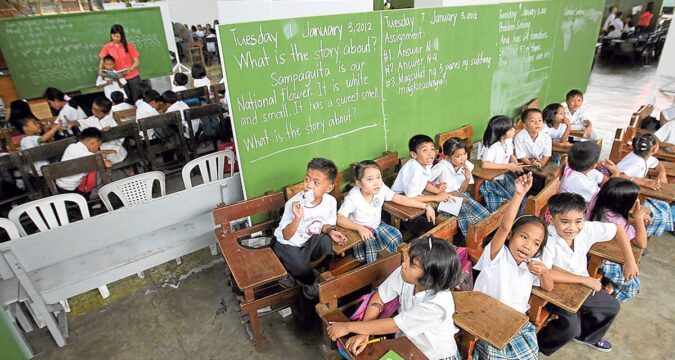
The word “education” comes from the Latin ‘educere’, meaning “to lead out” or “to bring forth.” In education, the student is not an empty bucket to be filled with facts, figures, and other information; and the teacher is not a “pay loader” dumping information into that bucket. Instead, a wise teacher recognises that each student has inherent abilities, latent potential, and natural gifts that must be given the chance to emerge and be discovered.
A teacher’s purpose is to help students become aware of themselves and the world around them, to know, value, and respect all people and things. This knowledge is central to our humanity and connects us to one another. This is the essence of true education.
Education is more than possessing talents, abilities, or knowledge. It means being fully human, showing concern for others, acting with compassion, and feeling a duty to help those in need. True educational success is not measured by accolades but by one’s commitment to serve others.
What a more peaceful, just, and happier world we would have if more people recognised their own value and the inherent dignity of others, which can never be taken away. Only when we acknowledge and respect our own worth can we truly value the rights and dignity of others
A teacher’s role is to affirm and encourage students’ abilities, fostering a positive and harmonious learning experience. The teacher acts as an expert gardener, guiding students as they explore, develop, and deepen their knowledge—helping them to grow, much like tending plants and flowers.
Enlightened law
I had the opportunity to share insights with students at The Manila Times College of Subic at Subic Bay Freeport. Their participation was excellent as we discussed children’s rights and education. This progressive institution has anticipated the new educational provisions of Republic Act 12322, or “An Act that allows the DepEd the flexibility to determine the pedagogical approaches to be implemented in the basic education curriculum.”
As we celebrate the 500 years of Christianity in the Philippines. The Chaplaincy to Filipino Migrants organises an on-line talk every Tuesday at 9.00pm. You can join us at:
https://www.Facebook.com/CFM-Gifted-to-give-101039001847033
This enlightened law is intended to free the creative abilities of gifted teachers and inspire students to develop self-awareness, knowledge of the world, and curiosity in creative ways.
This law grants greater freedom to teachers and autonomy to the Department of Education to choose the most effective teaching techniques, encouraging students to engage in self-study and group learning. It begins with self-awareness and a commitment to uphold the rights and dignity of oneself and others, and to fulfil duties towards self, family, and society.
This law grants greater freedom to teachers and autonomy to the Department of Education to choose the most effective teaching techniques, encouraging students to engage in self-study and group learning
This freedom enables teachers to develop creative methods, infusing enthusiasm and personality into their teaching. No longer constrained by rigid styles, teachers can now employ the pedagogical tools that best inspire students. Gifted teachers may focus their expertise in fields that benefit students most, such as advanced mathematics and science. Endless, repetitive instruction should be consigned to educational history.
Traditional methods remain widespread, and many teachers know no alternative. Intensive retraining will take time. Such methods, with their broad and multidisciplinary content, can slow down students who need varied and stimulating approaches. The best learning is enjoyable. Participatory approaches encourage independent thinking and self-expression. When students feel respected and their insights valued, they learn more effectively and with greater confidence. This helps them understand their emotions, relationships, strengths, and weaknesses.
True education nurtures personal values such as respect for others and nature. It guides, encourages and challenges students to think critically and understand society and the world. Such education provides a moral compass, enabling students to distinguish right from wrong and empowering them to choose good over evil.
It enhances their ability to be independent, reflective, and confident members of society. It also cultivates concern for others—especially the poor and marginalised—as well as empathy, ethical reasoning, and a sense of justice. Parents play an equally vital role, teaching by example through kindness and support.
That is education at its best. The freedom for gifted teachers to improvise and promote creative, collaborative learning is the future of an enlightened curriculum for the Philippines.

Father Shay Cullen
Preda.org