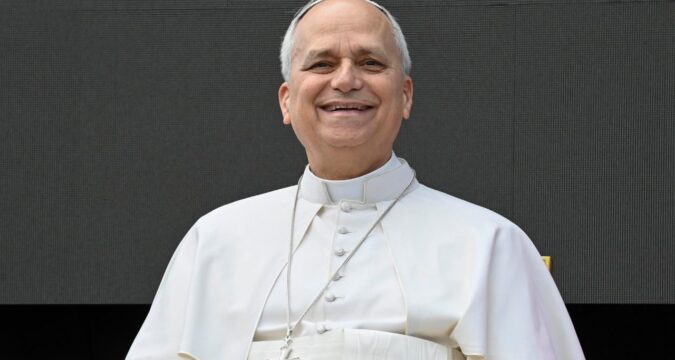
(SE): Pope Leo XIV celebrated his 71st birthday on Monday, September 14. Messages and expressions of good wishes arrived at the Vatican from around the world, Vatican News reported.
He also made his first visit to the Vatican Library as pope and announced plans for a new, modern building in Vatican City to accommodate the collections of the library and the Vatican Apostolic Archive, reports OSV News. He issued a decree for the construction of a new facility in Vatican City State, to be built on the site of an existing car park. The building, which will be shared by the Vatican Library and Vatican Archives, is set to be constructed “according to the most modern architectural and technological principles.”
This was one of two papal decrees published by the Vatican on the pope’s birthday. The other revoked measures introduced by Pope Francis in March 2021, which had reduced the salaries of cardinals and Vatican staff as a cost-saving response to the Covid-19 pandemic.
He remarked that celebrating his 71st birthday at the Vatican Library felt providential, noting that his mother had been a librarian.
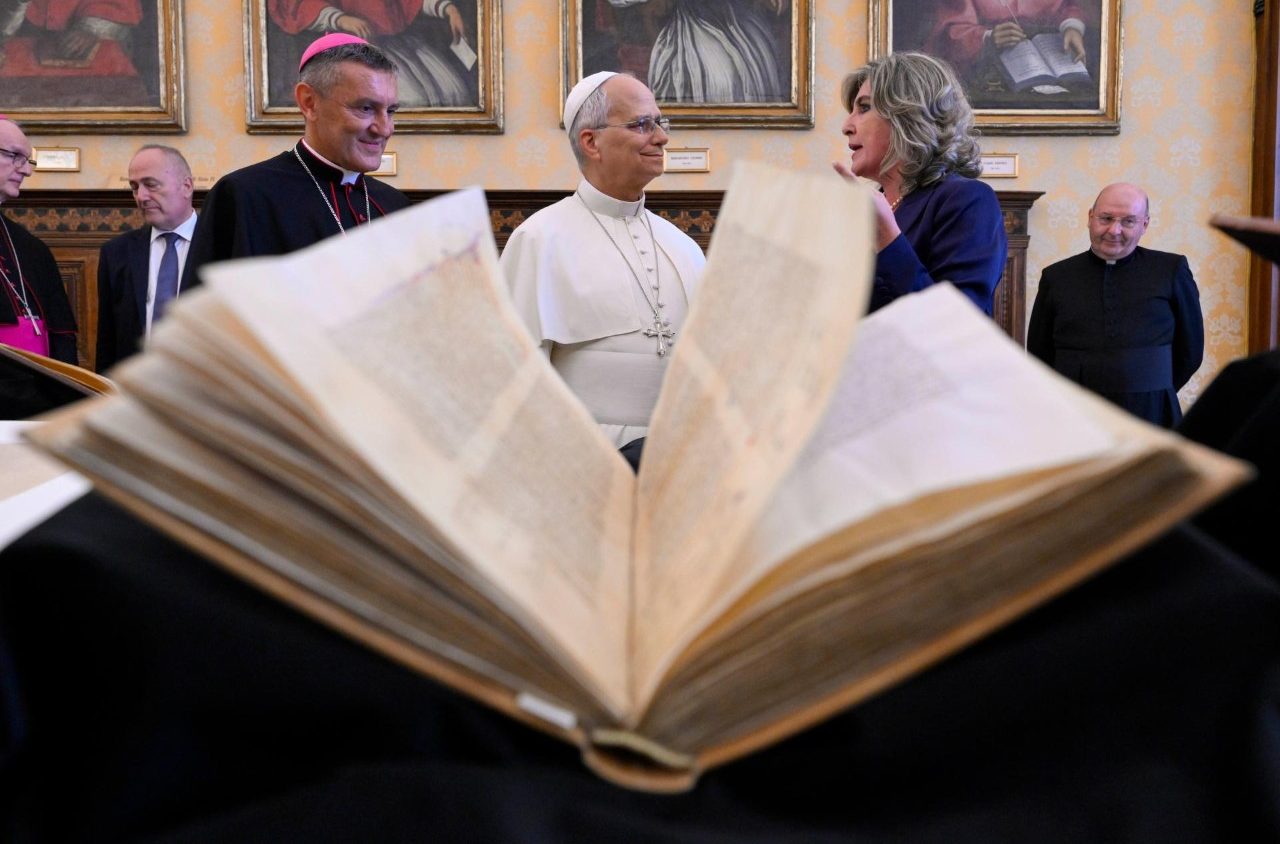
The library decree also reverses a prior decision by Pope Francis. Owing to limited space, Pope Francis had determined that surplus library holdings would be kept outside Vatican City State at the Pontifical Roman Major Seminary. In the September 14 decree, Pope Leo stated that retaining these materials within Vatican City is “undoubtedly preferable for many reasons to the solution already identified.”
The space at the seminary, designated by Pope Francis in 2022, will continue to house surplus library and archive holdings until the new Vatican City facility is finished.
The Vatican Apostolic Library, formally founded in the 15th century, contains a collection of two million books, 100,000 archival documents, and hundreds of thousands of coins, medals, and graphic works.
Peace has emerged as one of the most frequent themes in Pope Leo’s addresses over the past year.
Since speaking of an “unarmed and disarming” peace following his election, he has consistently emphasised peace and reconciliation during his apostolic journeys, meetings, and public statements.
His first encyclical, Magnifica humanitas, addressed artificial intelligence and insisted that technology must remain in service of human dignity, freedom, responsibility, and the common good
In the first year of his pontificate, the pope referenced these two themes over 400 times, and also frequently addressed unity, dialogue, hope, and human dignity.
His first apostolic journey took him to Türkiye and Lebanon. In Nicaea, marking the 1,700th anniversary of the first Ecumenical Council, he highlighted Christian unity, while in Lebanon he emphasised dialogue and peace.
Pope Leo subsequently became the first pontiff to visit Monaco and Algeria. In Annaba, the site of ancient Hippo, he visited locations linked to Saint Augustine. During his visit to Spain, he became the first Pope to address the Spanish Parliament.
On January 6, he closed the Jubilee Year 2025, begun by Pope Francis, by shutting the Holy Door of St. Peter’s Basilica.
His first encyclical, Magnifica humanitas, addressed artificial intelligence and insisted that technology must remain in service of human dignity, freedom, responsibility, and the common good.
He also completed Dilexi te, the apostolic exhortation on love for the poor begun by Pope Francis, revisiting the theme during his July visit to Lampedusa and meetings with migrants.
Born in Chicago on 14 September 1955, Pope Leo enters his 72nd year with the central themes of his pontificate clearly defined: peace, unity, and the defence of human dignity.