MANILA (UCAN): As the Philippines marked the 54th anniversary of Martial Law, Church leaders and civil society figures warned that only by learning from the past can the country avoid repeating it—a call echoed in urgent appeals for justice and historical truth.
Declared by late dictator Ferdinand Marcos Sr. on 21 September 1972, Martial Law ushered in a dark era of authoritarian rule in the Philippines. For 14 years, thousands of Filipinos, including Church workers and rights defenders, were tortured, killed, or forcibly disappeared, while billions of dollars were stolen from state coffers. The period ended in 1986 with the peaceful People Power Revolution, which forced Marcos and his family into exile.
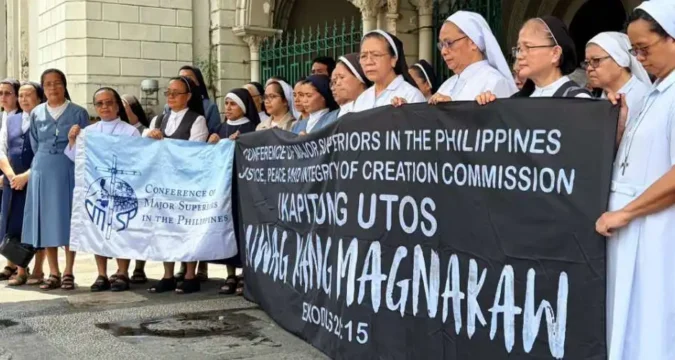
The Conference of Major Superiors in the Philippines, which gathered for Mass at the Immaculate Conception Cathedral of Cubao to commemorate the anniversary, issued a statement saying that the current presidency of Ferdinand Marcos Jr. makes it “especially urgent” to remember the dictatorial regime.
“Yet the present must be judged by present acts and institutions, not by a family name alone. The question is whether we have learned from history,” they declared, highlighting ongoing problems of corruption, political dynasties, distortion of truth, and delayed accountability. “The poor bear the cost” of abuse of power, the group said, and justice for victims of the Marcos dictatorship remains unfulfilled.
Yet the present must be judged by present acts and institutions, not by a family name alone. The question is whether we have learned from history
The Conference of Major Superiors in the Philippines
The religious superiors also called for the country to confront present wounds, especially those inflicted during the deadly war on drugs of former president, Rodrigo Duterte’, which saw thousands killed extrajudicially. Duterte is currently being prosecuted by the International Criminal Court for crimes against humanity, while his daughter, vice-president, Sara Duterte, faces impeachment for abuse of power.
The superiors argued that Sara Duterte’s impeachment trial will test “whether constitutional mechanisms can function according to evidence, due process, and the common good rather than personality, political loyalty, or vengeance.”
They added: “The sword of justice must not spare anyone. Whether Duterte or Marcos and their henchmen or any other public servant—everyone involved must be held accountable.”
Pablo Virgilio Cardinal David, vice president of the Federation of Asian Bishops’ Conferences, reflected that he spent his formative years “under the shadow of a dictatorship.” Cardinal David noted that the Philippines is “once again governed by a Marcos”—an “extraordinary turn in our country’s history”—and stressed that the return of a Marcos to Malacañang should not be “a reason for us to forget the history of martial law or dismiss the suffering of those who lived through it.”
Activist groups, including Akbayan, joined the call for vigilance. Marches in Manila and other cities demanded accountability for corruption, passage of anti-dynasty legislation, and protection against historical distortion.
As we celebrate the 500 years of Christianity in the Philippines. The Chaplaincy to Filipino Migrants organises an on-line talk every Tuesday at 9.00pm. You can join us at:
https://www.Facebook.com/CFM-Gifted-to-give-101039001847033
Akbayan president, Rafaela David, described the anniversary as a challenge for civil society. She urged that “remembering is resistance,” warning that the distortion of history enabled past abuses and risks enabling them again. “Should we fail to defend the truth, we also risk surrendering our freedoms,” she said.
As the nation reflects on the legacy of martial law, Church leaders and activists alike called for renewed commitment to justice, accountability, and historical memory, insisting that only through truth and vigilance can democracy and rights be safeguarded for future generations.