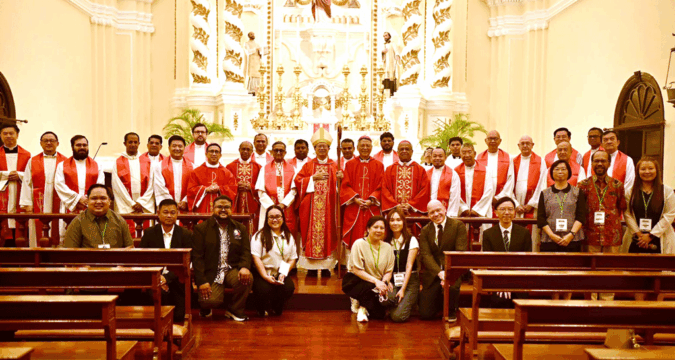
MACAU (SE): The participants at the opening Mass of the FABC-OSC [Federation of Asian Bishops’ Conferences – Office of Social Communication] gathering in Macau themed, “Magnifica Humanitas and the Synodal Ways of Evangelisation in Asia: Communicating Christ in the Age of Artificial Intelligence” were reminded that Church’s mission in the age of artificial intelligence must be rooted not simply in new technologies, but in prayer, listening and a genuine love for the people it serves,.
The gathering, which runs from October 27-31, brings together Asian bishops and Church communicators and takes place as the Diocese of Macau marks its 450th anniversary, linking a historic centre of missionary outreach with emerging questions about evangelisation in a digitally connected world.
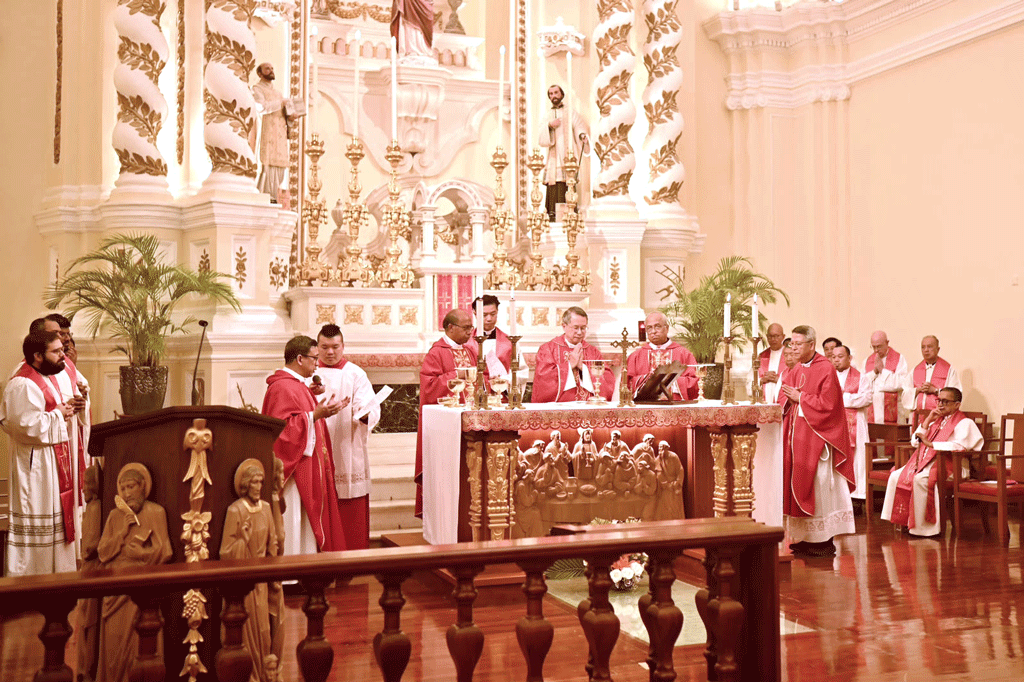
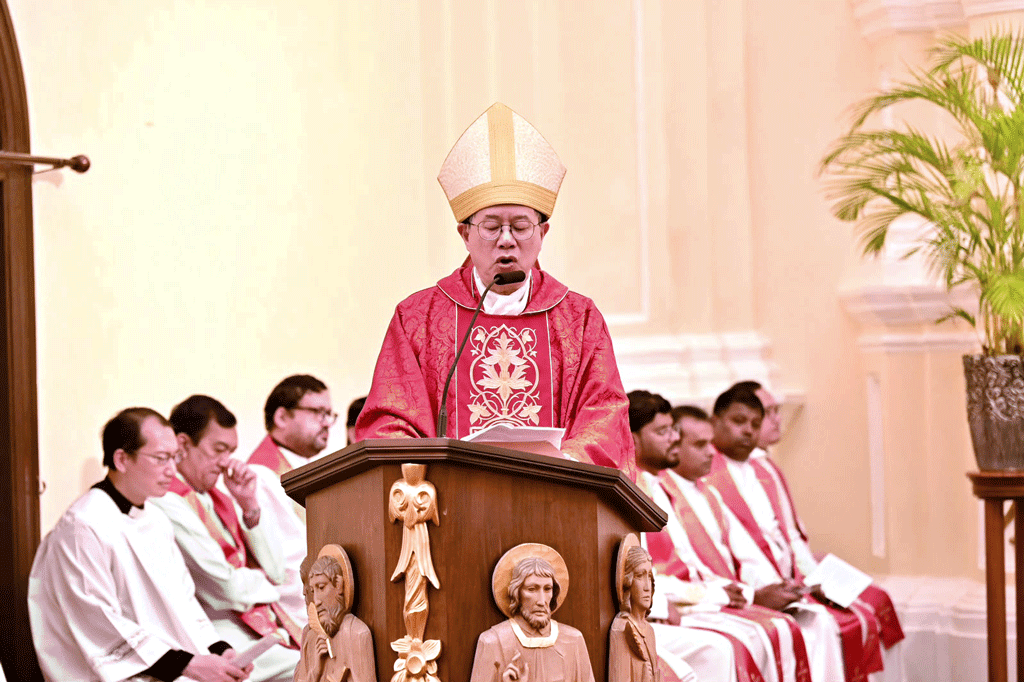
In the opening homily, Bishop Stephen Lee Bun-sang of Macau presented the liturgy as a foundation for the conference’s deliberations, rather than merely a preliminary celebration. The Scripture readings offered a framework for understanding both the Church’s identity and its responsibility to communicate the Gospel amid technological change.
Drawing on the reading from the Letter to the Ephesians, Bishop Lee recalled that the Church is built upon the foundation of the apostles and prophets, with Christ as its cornerstone. Its mission, therefore, does not begin with the capabilities of a communication platform, but with belonging to Christ and sharing in the apostolic mission.
The Gospel account of Jesus spending the night in prayer before choosing the Apostles brought that mission into sharper focus. The homily traced a movement from prayer and calling to encounter and healing: Jesus calls people personally and sends them to serve others, not to dominate them. Christian communication, it suggested, must follow the same pattern.
Also at the Mass were Cardinal Sebastian Francis, bishop of Penang, along with five other bishops and 15 priests. Father Peter Choy Wai-man, vicar general of the Diocese of Hong Kong also attended.
…how can the Church communicate Christ faithfully while remaining attentive to the people behind every message, image and digital interaction?
From missionary crossroads to digital encounter
Macau’s anniversary provided a historical setting for this reflection. The homily recalled the territory’s role in missionary outreach to other parts of Asia, including China, Japan, Korea and Vietnam. Remembering that history was presented not as nostalgia for past achievements, but as an invitation to renew the missionary spirit in different circumstances.
Today, those circumstances include digital spaces where people seek understanding, companionship and hope. The challenge before the Church is to become a bridge across these new boundaries while ensuring that technology serves human flourishing and safeguards human dignity.
The homily placed particular emphasis on synodal communication—a way of communicating shaped by walking together, listening and accompanying others without rushing to judgment. It invited participants to consider whose stories are told, whose voices receive attention and how Church communicators can strengthen cooperation across national and linguistic boundaries.
In this vision, the task is not merely to gain visibility or influence online. It is to become credible witnesses whose lives give substance to the message they proclaim. Wisdom, transparency and openness must accompany technological competence, while concern for people must remain central to every communication effort.
The challenge before the Church is to become a bridge across these new boundaries while ensuring that technology serves human flourishing and safeguards human dignity
A spiritual foundation for the discussions
The opening celebration thus situated artificial intelligence within a wider pastoral question: how can the Church communicate Christ faithfully while remaining attentive to the people behind every message, image and digital interaction? The homily’s response was to begin with prayer, remain rooted in Christ and make communication an expression of presence, service and love.
That emphasis sets a spiritual direction for a programme that includes AI and evangelisation, discernment in the use of AI, national reports and group reflection. Rather than treating artificial intelligence as an isolated technical issue, the gathering places it within the Church’s shared missionary journey in Asia.