MANILA (RVA News and LiCAS News): Public protests and pressure from Church and environmental groups forced authorities to halt Manila tree-cutting operations linked to a controversial expressway project on Wednesday, LiCAS News reported on May 27.
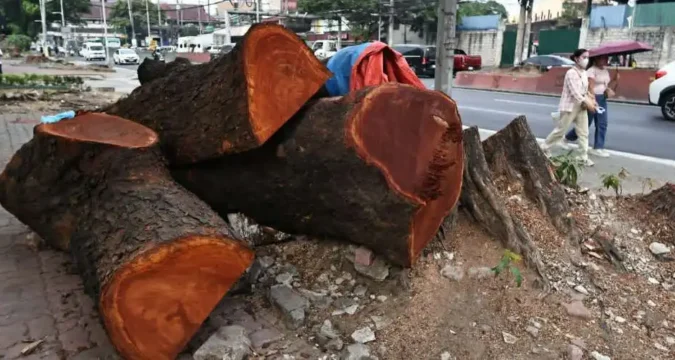
So far 38 trees had so far been uprooted and transferred to other locations. Environmental groups, however, said more than 200 trees had already been cut, while Greenpeace Philippines and anti-poverty advocates estimated that 617 trees would be affected by the project.
The Department of Environment and Natural Resources said further tree-cutting along Quirino Avenue for the Southern Access Link Expressway project had been “voluntarily stopped” following mounting public outrage over the removal of decades-old trees.
In a May 25 statement, Bishop Gerardo Alminaza, president of Caritas Philippines, condemned the mass cutting of decades-old trees along Quirino Avenue in Manila, and called on authorities to halt the activity immediately, RVA News reported.
Bishop Alminaza criticised the removal of trees for infrastructure development, arguing it increases hardship for communities already facing extreme heat, polluted air, and flooding.
“The mass cutting of decades-old trees along Quirino Avenue is an act of ecological violence against the people of Manila,” the bishop said.
Why must ‘development’ always demand the sacrifice of the vulnerable?
Bishop Gerardo Alminaza
Bishop Alminaza emphasised that the trees had served as protection for commuters and residents, providing shade and improving urban environmental conditions.
Caritas Philippines argued that development projects should not come at the expense of environmental protection and vulnerable communities.
“Why must ‘development’ always demand the sacrifice of the vulnerable?” the bishop asked, questioning urban planning approaches that prioritise vehicles and concrete infrastructure over people.
The tree removal has sparked public outcry, with reports suggesting hundreds of trees were affected by an infrastructure project linked to the Southern Access Link Expressway.
As we celebrate the 500 years of Christianity in the Philippines. The Chaplaincy to Filipino Migrants organises an on-line talk every Tuesday at 9.00pm. You can join us at:
https://www.Facebook.com/CFM-Gifted-to-give-101039001847033
The social action organisation also cited Laudato Si’, Pope Francis’ encyclical on environmental stewardship, warning against what it described as a “throwaway culture” that treats nature and vulnerable populations as expendable.
“The climate crisis is a present, urgent and unquestionable reality,” Bishop Alminaza said. “Every mature tree destroyed is a moral failure.”
Caritas Philippines called on public authorities and contractors to stop the tree-cutting, review infrastructure projects through the perspective of ecological justice and consult communities affected by environmental changes.
Government agencies and project proponents say that permits were secured and mitigation measures, including plans to plant 50,700 replacement seedlings, are part of the project.
According to recent updates, some replacement planting has begun, but residents and environmental groups remain sceptical about the long-term effectiveness.
However, critics maintain that legal compliance alone does not address wider concerns about ecological impact and urban environmental justice.
Caritas Philippines also urged the public to help protect remaining urban green spaces and demand accountability from leaders.