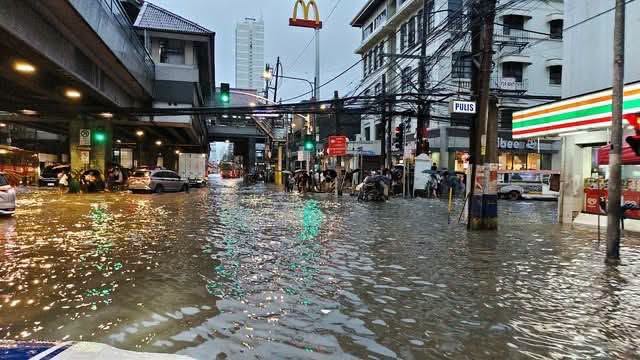
MANILA (UCAN): Flooding triggered by heavy rain and tropical cyclones has inundated vast areas in the Philippines, leaving at least 12 dead and over half a million people displaced, the National Disaster Risk Reduction and Management Council reported on August 10.
About 586,000 people have been displaced due to flooding in Metro Manila, and areas covered by the Luzon region due to heavy downpours and the impacts of tropical cyclone Kujira [MayMay] and Typhoon Dolphin, the National Disaster Risk Reduction and Management Council reported.
The council reported on August 10 that people have been affected in 33 provinces, 22 cities and towns, and 1,362 villages the nation’s main island.
Flooding prompted the government of to suspend work and classes in the National Capital Region, which covers a total of 636 square kilometres with an estimated 13 million residents.
Department of Social Welfare and Development reported that the government has readied five million food packs in around 1,000 warehouses to distribute among flood victims.
“This is the largest stockpile the country has had since we started implementing this system,” the department’s secretary, Rex Gatchalian, told reporters on August 10. He said that 54,370 food packs have already been released.
Besides, a total of 245,474 packs of non-food items are ready to be sent across the country to support affected communities, he added.
The agency released funds of about one million pesos [US$16,452] for financial assistance for the victims, especially those who died due to a landslide triggered by heavy rain, he further added.
Meanwhile, critics of the government continue to hit the still unresolved flood control-related anomalies in the country, which paved the way for more flooding even during normal rain occurrences in some regions.
As we celebrate the 500 years of Christianity in the Philippines. The Chaplaincy to Filipino Migrants organises an on-line talk every Tuesday at 9.00pm. You can join us at:
https://www.Facebook.com/CFM-Gifted-to-give-101039001847033
They say Filipinos continue to pay the price for massive graft in flood control projects over the years.
“This is not just about heavy rain. The repeated flooding in Manila must be examined in relation to corruption and the failure of flood-control projects,” Pastor Irma Balaba, spokesperson of the ecumenical group Promotion of Church People’s Response.
This is not just about heavy rain. The repeated flooding in Manila must be examined in relation to corruption and the failure of flood-control projects
Pastor Irma Balaba
“Billions of pesos have been allocated to protect the people, but when funds are stolen, manipulated, or spent on substandard and ineffective projects, ordinary citizens pay the price,” she said referring to flood graft scandals that have rocked the country recently.
A report from the Philippine Centre for Investigative Journalism, released on 31 August 2025, alleged that much of the 31 billion pesos [US$544 million] allocated for 421 flood control projects since 2022 was embezzled, saying the fund was spent on overpriced, poorly designed, or non-existent projects nationwide.
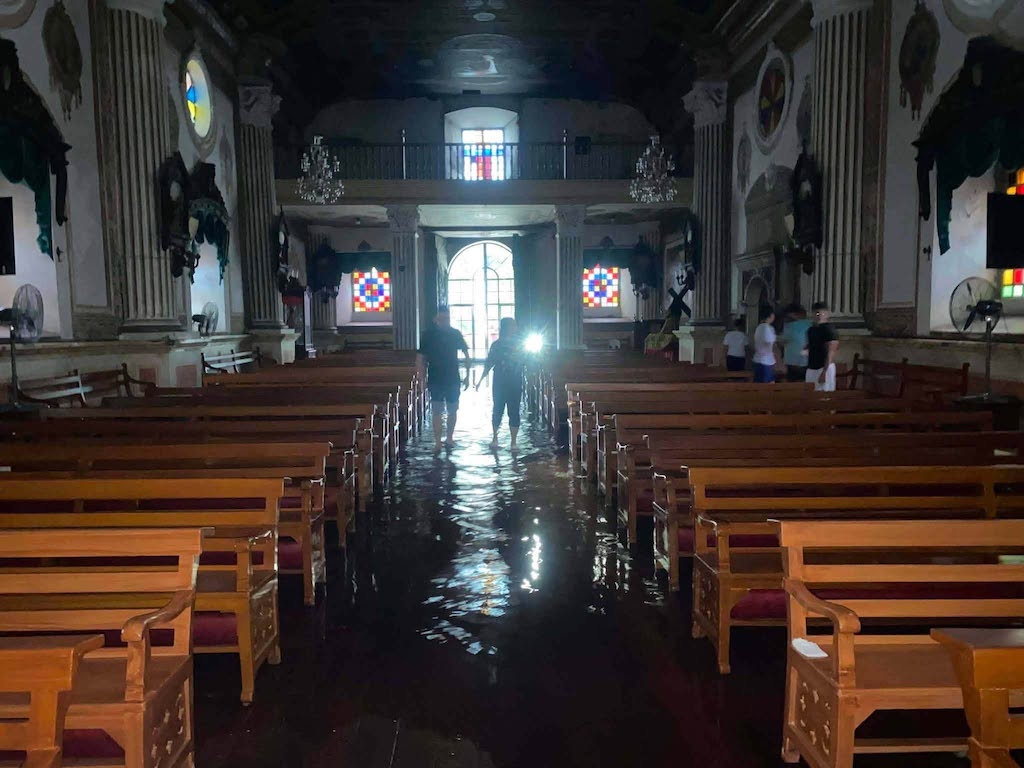
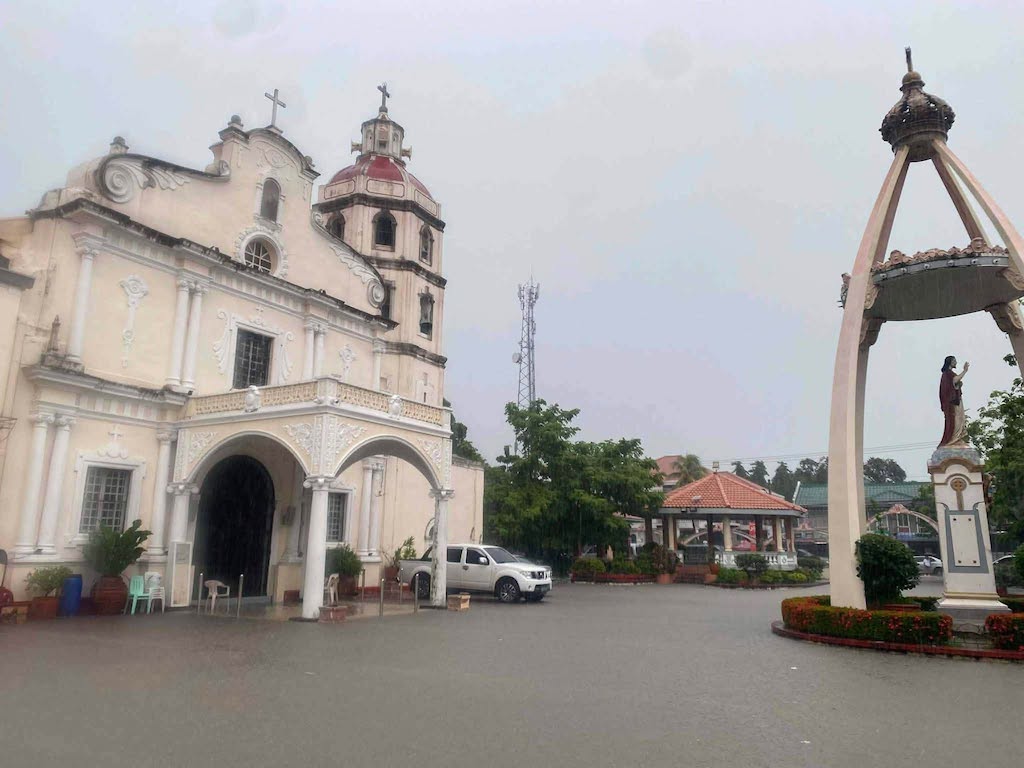
In related news, The Inquirer reported on August 11 that floodwaters also submerged the floors of the historic Santiago Apostol Parish Church—known as Betis Church—in Guagua, Pampanga, after days of nearly nonstop rain. It was declared a national treasure in 2001.
Pablo Virgilio Cardinal David of Kalookan, who grew up nearby, posted photos on his Facebook page.
“After days of almost nonstop rain, floodwaters have entered the church, submerging its beautiful old wooden floor. Betis is one of our country’s precious heritage churches — and among the few that still retain their original wooden floors, worn by the footsteps of generations who prayed there before us,” the cardinal posted.
“Betis is one of our country’s precious heritage churches—and among the few that still retain their original wooden floors, worn by the footsteps of generations who prayed there before us,” Cardinal David said.
Constructed in a refined Baroque style, Betis Church is 50 metres long, 12 metres wide and 10 metres high, with hardwood flooring that has survived previous lahar flows and floods. The cardinal recalled the church’s resilience, highlighting that it endured the catastrophic 1991 eruption of Mount Pinatubo, which devastated large parts of Central Luzon.