HONG KONG (SE): A two-day academic symposium marking the 80th anniversary of the Diocese of Hong Kong, held from September 11 to 12 at Saint Francis University, examined how the Church serves as a “messenger of hope” across key social domains, including labour, family, bioethics, social reconciliation, and ecology. Standing as living testimony to that mission, the parallel sessions under the theme “Word Made Flesh” complemented the academic sessions by showing how frontline initiatives translate Catholic social teaching into tangible social impact.
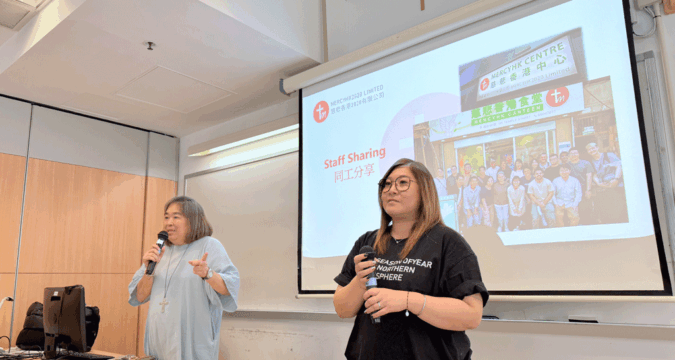
MercyHK: hope through service
By employing people who have overcome drug addiction, MercyHK builds a kind of empathetic trust needed to guide current clients through outreach, counselling, housing assistance, and detox referrals.
Ah Ming, who has recovered from addiction, told the symposium that encountering Jesus through Christians brought him inner peace after decades of hopelessness, and that he is now able to help others walking the same path at MercyHK.
Ah Bee, also in recovery, expressed gratitude for her employment at the Mercy Canteen, recalling how MercyHK staff supported her through a relapse and guided her back towards recovery. To mark the milestone of her successful rehabilitation, caseworker Lucia Leung has promised her a trip to Japan.
Founded in 2016 during the Extraordinary Jubilee of Mercy by Oblate Father John Wotherspoon, MercyHK offers physical, mental, and spiritual care to marginalised groups. It operates three centres, six shelters, and a canteen, serving homeless people, refugees, asylum seekers, and foreign domestic workers through temporary housing, food allowances, medical care, and legal accompaniment.
By employing people who have overcome drug addiction, MercyHK builds a kind of empathetic trust needed to guide current clients through outreach, counselling, housing assistance, and detox referrals
Dignity for the unborn
Established by the diocese in 2017 at Holy Cross Catholic Cemetery in Chai Wan, the Angel Garden provides dignified burial for infants miscarried before 24 weeks of gestation—a group previously classified in law as medical waste. Father Dominic Chan Chi-ming, former chairperson of the Diocesan Board of Catholic Cemeteries, said the project had advocated for crucial policy changes that inspired other religious groups and government bodies to open dedicated burial grounds and cremation services.
Building on that foundation, the diocese later established the Garden of Hope to offer Catholics a permanent and dignified alternative for the burial of ashes.
To promote further respect for human life, Father Chan and a group of concerned individuals are petitioning government officials to establish statutory miscarriage leave for grieving mothers and their husbands. They have also undertaken extensive outreach in schools and medical circles, including sharing sessions with medical students at the Chinese University of Hong Kong, encouraging future doctors to adopt a more compassionate approach towards parents who have suffered pregnancy loss.
Illuminating futures for young people
Led by vicar general, Father Paul Kam Po-wai, the Light Up Education Fund assists incarcerated young people aged 35 and under through structured group therapy, education subsidies, and reintegration planning. The fund operates independently of diocesan finances, relying entirely on donations. Expressing gratitude to donors, team members, and supporting parishes, Father Kam said the initiative’s survival depends heavily on the collective participation of the local community.
Established by the diocese in 2017 at Holy Cross Catholic Cemetery in Chai Wan, the Angel Garden provides dignified burial for infants miscarried before 24 weeks of gestation—a group previously classified in law as medical waste
Social worker Marcus Sun noted that the rigid routines of incarceration often leave young people feeling detached, stagnant, and burdened by past mistakes. The project responds with narrative approaches that encourage participants to re-examine their life stories and identify overlooked strengths. By shifting their outlook from inevitable failure to genuine choice, it helps them recognise that they are not defined solely by their past.
Sparking hope for environmental care
Parishes and environmental groups are turning faith values into ecological action. At St. Thomas the Apostle Parish, Tsing Yi, volunteers have installed rooftop solar panels to conserve electricity and introduced beverage carton recycling at parish gatherings. The parish also works with Green@Kwai Tsing on joint eco-events.
The environmental group of St. John the Baptist Parish, Kwun Tong—formed in 2016 and guided by the encyclical, Laudato Si’—promotes ecological responsibility through nature trips, beach clean-ups, film screenings, vegetarian food tastings, and bi-monthly educational articles.
To broaden these efforts, a regional network links the Diocesan Commission for Integral Human Development with parish eco-groups, encouraging resource sharing, joint events such as the Ecological Way of the Cross, and media promotion in the spirit of loving God, neighbour, and the Earth.
Auxiliary Bishop Joseph Ha Chi-shing told participants that lay people hoping to form a parish environmental group should first establish a structured working team, since parish priests are far more inclined to approve environmental projects backed by a united group of parishioners.
Taken together, these initiatives show how hope and transformative mercy are being passed on across the Hong Kong community.