Sunday Examiner
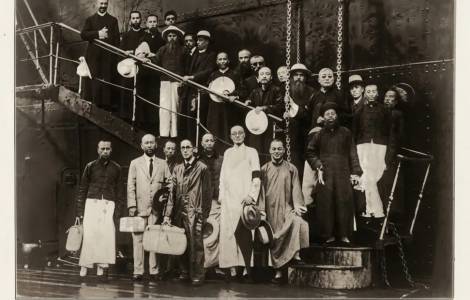
A hundred years ago, on 28 October 1926, six Chinese priests knelt in St Peter’s Basilica to receive episcopal ordination from Pope Pius XI. Twenty years later, Pope Pius XII established the Chinese hierarchy, placing the Church in China on an equal footing with every other local Church. The centenary conference at the Pontifical Urban University in Rome on 5 November was meant to celebrate precisely that: a Church fully Chinese and fully Catholic, rooted in its own soil and united with the Successor of Peter.
It is regrettable, then, that some reporting has turned a moment of communion into a story of capitulation. The Pillar reported that Cardinal Stephen Chow S.J. “defended the idea that sinicisation is a form of inculturation”, under a headline claiming that Chinese bishops had praised sinicisation as synodality. In Taiwan, the Central News Agency, whose report was carried by Radio Taiwan International, cast the cardinal as proposing that Rome and Beijing might “each take a step back” and “eliminate differences”.
The cardinal’s text and slides tell a different story. His title named three terms: inculturation, sinicisation and interculturality. One slide simply read “Options”. He did not merge the three. He distinguished them.
He defined inculturation in the classic Catholic sense: a two-way, ongoing dialogue in which the Gospel transforms a culture while local values and expressions enrich the life of the Church. His examples included the Chinese Rites and Matteo Ricci’s rendering of St John’s Gospel. He even named the risk within inculturation itself: the culture being evangelized, or a cultural reading of the Gospel without the full participation of faith.
It is regrettable, then, that some reporting has turned a moment of communion into a story of capitulation
Sinicisation he placed under a different heading altogether: “State Ideology (Zhongguohua)”. He described it plainly as a national policy under President Xi Jinping requiring every religion, from Buddhism, Taoism and Islam to Protestantism and Catholicism, to align with the ideology of the Communist Party, socialist values and the spirit of patriotism. He cited scholars who argue that the policy is less about cultural assimilation than about political alignment with the Party-State. When he said that, for President Xi, all religions must be oriented towards Chinese politics and culture, he was reporting a policy, not endorsing it.
To present the cardinal’s summary of the government’s view as his personal conviction is to read his paper backwards.
The comparison with synodality has been misplaced in the same way. The cardinal did not liken sinicisation to synodality. He likened interculturality to it, and he took that idea from no less a guardian of doctrine than Cardinal Joseph Ratzinger, who, as Prefect of the Congregation for the Doctrine of the Faith, proposed interculturality to the Asian doctrinal commissions meeting in Hong Kong in 1993. Grounded in natural law and human reason, it is a meeting place where traditions correct one another. Its marks, sincere speaking, empathic listening and the search for common ground, are those of the Conversation in the Spirit now used in Hong Kong parishes.
Nor did the cardinal propose to dissolve differences. His paper speaks of “allowing the holding of differences with respect”, and, as The Pillar itself quoted him, he concluded that we can identify convergences and “also appreciate the divergences”. That is not a retreat from the faith. It is how one speaks with a neighbour without surrendering one’s convictions.
Some will recall the cardinal’s earlier remark that sinicisation, as applied in Sichuan, has “many points of contact” with inculturation. Points of contact are not identity. Where policy and the Gospel touch, in language, art, architecture and reverence for ancestors, the Church has every reason to engage. Where they part, the Church must say so. That is what his paper proposes: a formation that “takes seriously the Christian faith and the state policy since both shape the circumstances of the Chinese Catholics”.
…what his paper proposes: a formation that “takes seriously the Christian faith and the state policy since both shape the circumstances of the Chinese Catholics”.
At its heart is a question every Chinese Catholic lives daily: how to be a faithful Catholic and a loyal citizen at the same time. That question was not invented in Beijing. It is as old as the Gospel’s distinction between what belongs to Caesar and what belongs to God, and as old as Ricci’s long years at the Ming court. Pretending it away helps no one, least of all the faithful on the mainland.
Those who have written critically of the cardinal have every right to their views. Many write out of genuine love for the Church in China. Vigilance about religious freedom is a service to the Church. But vigilance is best served by accurate reading. When a careful distinction is reported as an equation, the casualty is not one cardinal’s reputation but the fragile trust on which every dialogue depends.
In his video message to the same conference, Pope Leo XIV recalled that the Church’s mission must never be confused with colonial ventures or the export of cultural models, and that unity with the Successor of Peter remains the indispensable sign of communion. Cardinal Stephen’s paper stands squarely within that line. It invites the Church in China and the universal Church to keep listening and to walk together with more than a billion brothers and sisters who do not share our faith but share our culture, our language and our nationality.
The six bishops of 1926 were ordained so that the Church in China could be fully Chinese and fully Catholic. A century later, that remains the task. It deserves to be reported as it was spoken.