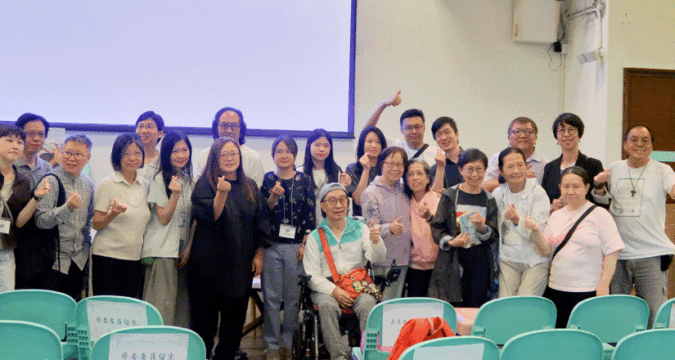
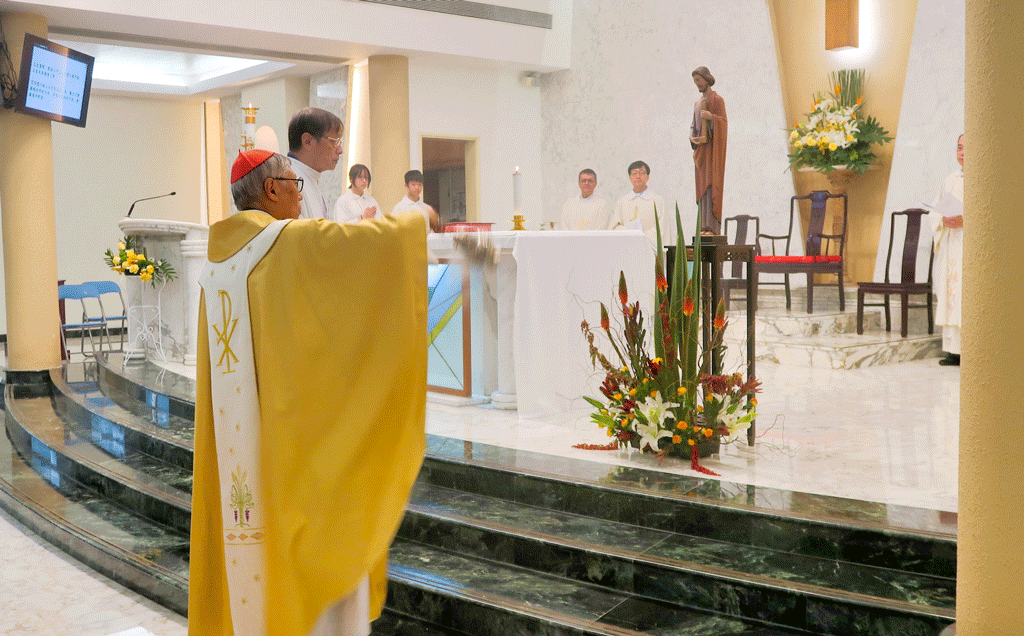
HONG KONG (SE): Cardinal Stephen Chow, S.J. led a Mass at Holy Cross Church on May 1 to celebrate the feast of St Joseph the Worker and the 35th anniversary of the Diocesan Commission for Labour Affairs. He spoke about the dignity of all workers and cautioned against attitudes that overlook the value of grassroots labour. He emphasised that respecting work means recognising the person behind every job.
The divine nature of work
During his homily, Cardinal Stephen recognised the commission’s 35 years of service to Hong Kong’s workers. “It has faced many trials, yet we see its perseverance in journeying with workers to safeguard their dignity in a changing world,” he said.
The cardinal also spoke about the prejudice and arrogance that can take away the dignity of manual labour. He compared this to how Jesus Christ was sometimes dismissed as just the son of a carpenter.
The cardinal warned that class-based bias is still affecting today’s society and keeps people from seeing the value and gifts of every person.
He highlighted the moral value of labour by mentioning the sacrifice of foreign domestic workers during the Wang Fuk Court fire.
Cardinal Stephen pointed out that their willingness to protect those they cared for, even at the risk of their own lives, shows the deep dignity and responsibility that workers carry.
Building bridges in the labour market
Cardinal Stephen said that a fair society needs both fair pay and good working conditions. He explained that respect and care help build positive values and hope, while suspicion and resentment hurt both productivity and the spirit of work.
He gave examples from Japan, where even waste collectors are respected, and suggested that Hong Kong could work toward valuing all jobs in the same way.
During a sharing session following the Mass, the cardinal reflected on the Church’s role as a bridge-builder. Drawing on his pastoral experience among migrant fisherfolk in Taiwan, he said many labour disputes arise from entrenched attitudes and a lack of mutual understanding.
Rather than framing such issues as class conflict, he encouraged a synodal approach rooted in listening and dialogue. “While the Church must support workers who often lack a voice, its goal is to help all parties be heard and to find common ground,” he said.
The cardinal also spoke about the prejudice and arrogance that can take away the dignity of manual labour. He compared this to how Jesus Christ was sometimes dismissed as just the son of a carpenter
A legacy of ‘salt and light’
During the celebration, Maggie Wong Mei-ki, the commission’s first executive secretary, looked back on its founding in 1991. She said it was inspired by Catholic social teaching and guided by the late John Baptist Cardinal Wu Cheng-chung. She also thanked the clergy and lay people who helped start its early outreach.
Wong talked about how the commission grew from one pastoral centre to a network of parish-based groups. She mentioned projects like a mobile service vehicle that brought legal and labour help straight to workers. She encouraged the Church to keep being “salt and light” by supporting people whose work often goes unnoticed.
Drawing on his pastoral experience among migrant fisherfolk in Taiwan, he said many labour disputes arise from entrenched attitudes and a lack of mutual understanding
Looking to the future, current secretary general, Dorothy Lee Ching-man, pointed out new challenges in Hong Kong’s labour market, such as the effects of artificial intelligence and imported labour. She said these changes might not cause mass unemployment, but they could lead to skilled workers moving into lower-paying jobs.
Lee said the commission’s mission is not just about advocacy, but also about walking alongside workers and showing solidarity. She explained that through mutual-support groups, the commission aims to empower workers and help build resilience at the grassroots level.
Guest speakers, including a sanitation worker, a lift technician, a security guard, and a volunteer, also shared how the commission helped them find spiritual support and feel more dignity in their work.