MACAU (RVA News): Dr. Levi Checketts, professor of Religion and Philosophy and associate director of the Centre for Applied Ethics at Hong Kong Baptist University, issued a strong warning against the uncritical embrace of artificial intelligence and transhumanist ideologies, especially in the context of the Asian Church.
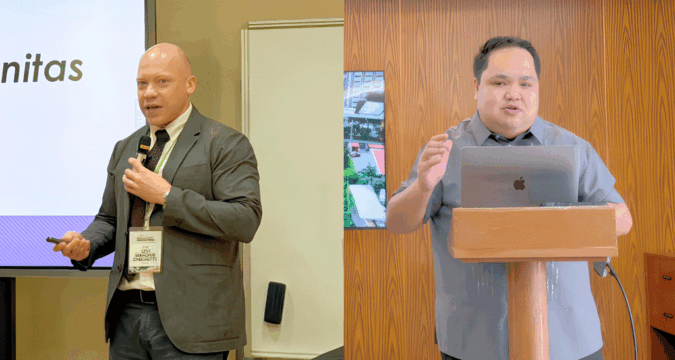
In his keynote address on 28 October, delivered after the opening Mass of the Federation of Asian Bishops’ Conferences Office of Social Communication [FABC-OSC] Assembly in Macau, which ran from October 27-31, he urged Asian Church communicators to ground their technological discernment in human dignity and a preferential option for the marginalised.
Held at St. Joseph’s Seminary, the gathering brought together Asian bishops, priests, and communication delegates under the theme, “Magnifica Humanitas and the Synodal Ways of Evangelisation in Asia: Communicating Christ in the Age of Artificial Intelligence.”
The human and ecological fallout of AI
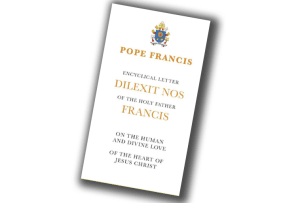
Highlighting Pope Leo XIV’s recent encyclical, Magnifica Humanitas, Checketts cautioned against transhumanist ambitions—driven largely by Silicon Valley—that view human limits, vulnerability, and ageing as flaws to be eliminated through technology. He stressed, “Finitude and vulnerability, when truly accepted, do not diminish us but open us to recognising the face of God and others,” echoing the encyclical.
He warned that quantifying human worth through artificial intelligence risks reviving historical forms of eugenics, in which individuals with “lesser” measured capacities are devalued.
Highlighting Pope Leo XIV’s recent encyclical, Magnifica Humanitas, Checketts cautioned against transhumanist ambitions—driven largely by Silicon Valley—that view human limits, vulnerability, and ageing as flaws to be eliminated through technology
Addressing the unique Asian context, Checketts emphasised that technology cannot be evaluated solely by economic growth, gross domestic product [GDP], or efficiency metrics. He pointed to the severe human and environmental costs hidden behind AI supply chains in Asia—such as toxic environmental degradation caused by rare-earth element mining in Inner Mongolia, hazardous e-waste dumping in South Asian communities, and low-paid, psychologically taxing data-tagging labour performed by underemployed women in the Philippines and South Korea.
“The quality of a civilisation is measured not by the power of its means, but by the care it offers and its ability to recognise the other as a face, not merely a function,” he noted, urging Church leaders to measure success by compassion, not technological prowess.
Invoking the principle of subsidiarity, Checketts urged delegates to avoid generic, top-down responses. Instead, he called on local Churches, Caritas institutions, and parish ministries across Asia to serve as ethical sanctuaries, shielding vulnerable populations—such as factory workers, domestic helpers, migrants, and the rural poor—from digital exploitation.
Rather than building a technological Tower of Babel focused on dominance, Checketts advocated a communal model inspired by Nehemiah’s rebuilding of Jerusalem—one in which Asian Catholics engage in active, inclusive dialogue with local cultures and faith traditions to co-create a human-centred future. “We must choose to rebuild Jerusalem, not Babel—building community, not just connectivity,” he urged.
[Checketts] warned that quantifying human worth through artificial intelligence risks reviving historical forms of eugenics, in which individuals with “lesser” measured capacities are devalued
A moral trajectory for AI
During the afternoon talk, Professor Leo-Martin Angelo R. Ocampo framed humanity’s technological crossroads through the biblical contrast between the Tower of Babel and the city of Jerusalem.
Ocampo, a Filipino theologian, called on Asian Church communicators to practise deep moral and spiritual discernment in all interactions with artificial intelligence. “The decisions we make about technology are ultimately moral decisions for the Church,” he stated.
The lay Dominican and research associate at the Centre for Theology, Religious Studies and Ethics at the Pontifical and Royal University of Santo Tomas in Manila, the Philippines, delivered his address during the afternoon session on October 28 at the conference hall of St. Jose Villa in Macau.
Drawing from Pope Leo XIV’s encyclical, Magnifica Humanitas, and the Ignatian tradition of discernment, Ocampo challenged participants to examine whether their adoption of technology builds a self-serving “Tower of Babel” or contributes to “rebuilding Jerusalem.”
He explained, “The Tower of Babel represents a project conceived without reference to God, built on pride, self-sufficiency, and control that reduces the human person to data points and performance. Rebuilding Jerusalem, as seen in the Book of Nehemiah, is a shared communal effort that rebuilds human relationships first, ensuring everyone has a place.”
The Tower of Babel represents a project conceived without reference to God, built on pride, self-sufficiency, and control that reduces the human person to data points and performance. Rebuilding Jerusalem, as seen in the Book of Nehemiah, is a shared communal effort that rebuilds human relationships first, ensuring everyone has a place
Leo-Martin Angelo R. Ocampo
He explained that “the Tower of Babel represents a project conceived without reference to God, built on pride, self-sufficiency, and control that reduces the human person to data points and performance. Rebuilding Jerusalem, as seen in the Book of Nehemiah, is a shared communal effort that rebuilds human relationships first, ensuring everyone has a place.”
Ocampo emphasised that while AI technology is not inherently evil, it is never neutral in practice. “Every algorithm reflects the priorities, values, and power structures of its developers,” he cautioned. He warned against confusing technical efficiency with moral goodness: “Efficient systems can easily amplify bias or exclude the vulnerable if we fail to exercise ethical scrutiny.”
Highlighting personal and pastoral applications, he noted that while digital tools can reduce research friction for ministers, they can never replace the human heart, authentic presence, conscience, or personal witness.
“AI will not be ethical on its own; the ethics must come from the users,” Ocampo stressed. “A priest must never outsource his friendship with Christ, his study of the Word, or his love for his people to an algorithm.”
Connecting his reflection to the Asian Church’s commitment to synodality, Ocampo urged Catholic leaders to practise communal listening and to give voice to those most affected by technological shifts, especially marginalised communities. “Only by listening to the experience of the marginalised can we ensure that artificial intelligence serves fraternity, human dignity, and the common good,” he said.
Ocampo emphasised that while AI technology is not inherently evil, it is never neutral in practice… He warned against confusing technical efficiency with moral goodness