by John Singarayar SVD
A month that speaks to the heart
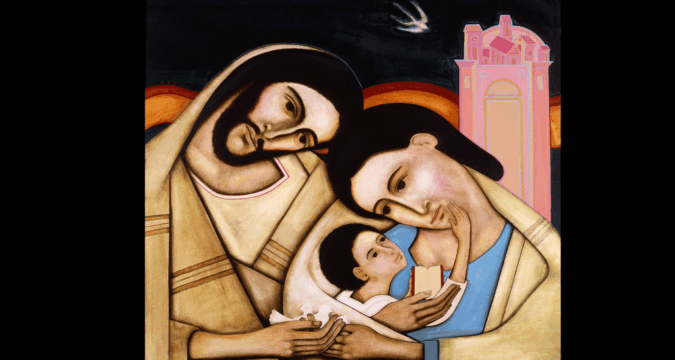
May arrives quietly, yet it carries a deep spiritual invitation. It is a time when the Church places before us two simple but powerful figures: St. Joseph the Worker and Mother Mary. At the same time, many in religious life find themselves in moments of transition—being moved from one place to another, entrusted with new roles, or asked to let go of what has become familiar.
These are not distant ideas for me. I remember one particular transfer that came without warning. I had just begun to feel at home—comfortable with the people, the rhythm, and even the small corner where I prayed each evening. Then the message came: it was time to move. I smiled, as we often do, but inside there was resistance. It felt like being uprooted before I had fully taken root.
Looking back, that moment became a quiet turning point. It taught me that vocation is not about staying where we feel settled but about learning to belong wherever God sends us.
The quiet strength of daily work
St. Joseph does not speak in the gospel, yet his silence is full of meaning. His life reminds us that vocation is not proven through extraordinary achievements but through steady faithfulness. He worked with his hands, lived with uncertainty, and trusted without needing recognition.
… vocation is not about staying where we feel settled but about learning to belong wherever God sends us
There were days in my own journey when the routine felt heavy. The same responsibilities, the same schedule, the same unnoticed efforts. It is easy in those moments to wonder if what we do really matters. But slowly, through prayer and reflection, I began to see differently.
A simple conversation with someone in need, a quiet act of service, even preparing something for the community—these were not small things. They were the place where God was present. Like Joseph, I began to understand that holiness often hides in the ordinary.
Work, then, is not simply about completing tasks. It is about offering oneself, little by little, day by day.
Mary and the courage to say yes again
If Joseph shows us how to act, Mary shows us how to receive. Her “yes” was not a single moment frozen in time. It unfolded through a lifetime of uncertainty, change, and quiet endurance.
I have often found myself returning to Mary during times of confusion. When a new responsibility felt beyond my ability, or when I questioned whether I was truly where I was meant to be, her example became a source of quiet strength.
St. Joseph does not speak in the gospel, yet his silence is full of meaning. His life reminds us that vocation is not proven through extraordinary achievements but through steady faithfulness
There was a moment, standing in a new community where everything felt unfamiliar, when I simply sat in the chapel and said, “I don’t understand this, but I will try to trust.” It was not a perfect prayer, but it was honest. And somehow, that was enough.
Mary teaches us that we do not need to have everything figured out. We only need the courage to say yes again, even when the path is unclear.
Transitions as a place of growth
Religious life today is marked by movement. Communities change, responsibilities shift, and we are often asked to begin again. These transitions can feel unsettling. There is a natural desire to hold on to what is known.
I remember packing my belongings during one transfer, noticing how little I actually carried. A few books, some clothes, a few personal items. It struck me then: perhaps this is what freedom looks like—not having everything in place but being ready to move when called.
That does not mean it was easy. There was sadness in leaving behind people who had become family. There was uncertainty about what awaited me. But over time, I discovered something unexpected. In each new place, there were people to meet, stories to hear, and new ways to serve.
Transitions began to feel less like interruptions and more like invitations.
Religious life today is marked by movement. Communities change, responsibilities shift, and we are often asked to begin again. These transitions can feel unsettling
Receiving vocation as a gift
One of the quiet struggles in religious life today is the temptation to see vocation as a burden. Responsibilities increase, expectations grow, and sometimes the joy we once felt seems distant.
I have experienced that too—the quiet tiredness that settles in, the questions that come without clear answers. In those moments, it helps to return to the beginning: the first sense of being called, the simple desire to follow.
Vocation is not something we created. It is something we received. It is a gift, given by a God who continues to call, even when we feel uncertain.
The risen Christ does not ask for perfection. He asks for openness. Each day becomes another chance to respond, not with grand gestures, but with a simple willingness to continue.
A quiet renewal
May, in its simplicity, offers a path toward renewal. Through Joseph, we rediscover faithfulness in work. Through Mary, we learn the courage to trust. Through our own transitions, we are invited to grow.
Vocation is not something we created. It is something we received. It is a gift, given by a God who continues to call, even when we feel uncertain
Spiritual life does not become strong overnight. In my own journey, it has grown slowly—through small prayers, moments of silence, and even through struggles I did not fully understand at the time.
What I have come to realise is this: God is present in all of it. Not only in clarity, but also in confusion. Not only in strength, but also in weakness.
The call of the risen God is gentle but persistent. It does not force; it invites. It does not overwhelm; it accompanies.
And so, we continue—sometimes with confidence, sometimes with hesitation—but always with trust.
To accept this call as a gift is not to have all the answers. It is simply to keep saying yes, one day at a time.