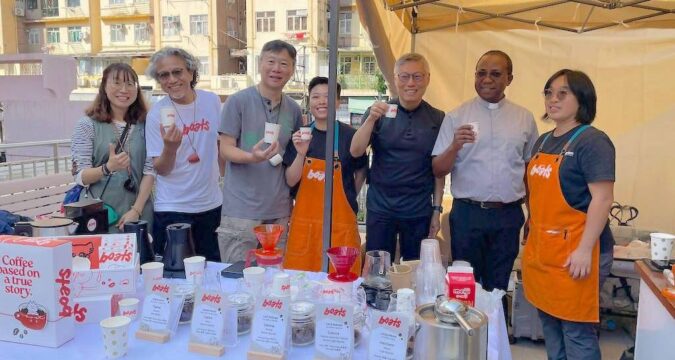
HONG KONG (SE): Since late last year, a unique coffee brand called Coffee BOATS has been appearing in various parishes, where young people enthusiastically serve coffee to parishioners while sharing insights about their brews. Ringo Lam Wing-kwan, the founder, envisions the brand as more than just a coffee seller as it symbolises ethical business practices and a passion for community service.
Lam’s coffee journey began eight years ago during a business trip to San Francisco, where he decided to stay behind for a coffee brewing class. With a background in IT and a history as a serial entrepreneur, he opted to leave the tech world behind to dive into coffee roasting. He believes that sharing a cup of coffee fosters a sense of conversation, which is increasingly needed in today’s individualised society.
Last year, alongside several alumni from Wan Yan College, he initiated the Coffee BOATS project, merging high-quality coffee with a social cause to help the marginalised through the benefit corporation.
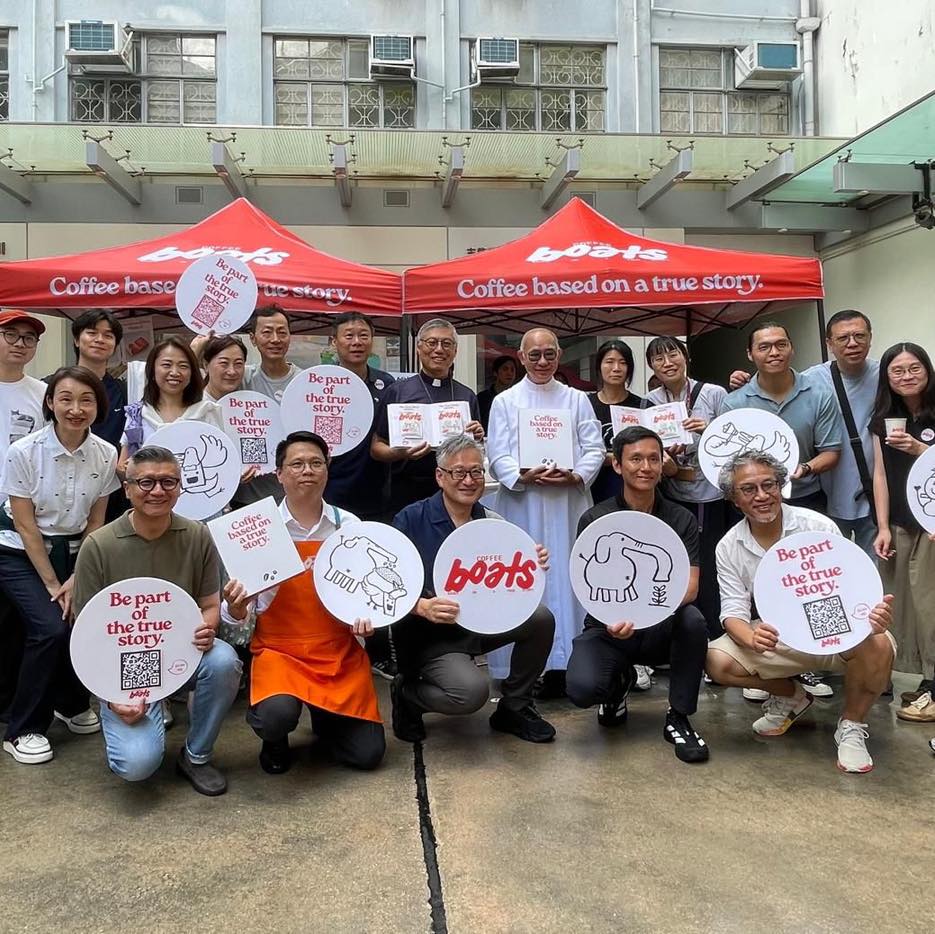
“BOATS” is an acronym for “Based On A True Story,” meaning that every cup of coffee carries a real-life story behind it.
The project was officially launched in October 2025, in a ceremony officiated by Cardinal Stephen Chow, S.J., at the Cathedral of Immaculate Conception. The cardinal played a crucial role in the venture by promoting the idea of direct trade through Church-associated cocoa bean farms, which is fundamental project’s commitment to sustainable and ethical sourcing.
By forming direct trade relationships with farmers in Colombia, Ethiopia, and Northern Thailand, Coffee BOATS is ensuring that these communities receive higher prices for their coffee, leading to improved living standards, as some farmers report earning three times their previous daily wages.
In Colombia, Lam sources coffee from Finca Villa Loyola, a historic Jesuit-owned farm in Nariño. The farm not only employs locals, thus fostering community involvement, but is also successful in exporting coffee to the United States. It provides local farmers with the necessary training to cultivate coffee, steering them away from growing illicit crops.
He believes that sharing a cup of coffee fosters a sense of conversation, which is increasingly needed in today’s individualised society
In Thailand, Coffee BOATS supports a project aimed at poverty alleviation among indigenous youth orchestrated by the Montfort Brothers of St. Gabriel. The coffee from these efforts, known as “Karen Muga” [Auntie Karen], is harvested by the Karen ethnic group. Additionally, the project creates extra income for local artisans by promoting their handmade products alongside coffee sales.
Ethiopia also benefits from this initiative. A Caritas-led programme has initiated coffee exports from the remote Bale area, overcoming logistical challenges posed by steep mountainous terrain.
Lam believes that this direct trade model establishes connections between farmers and international markets, providing them with consistent customers and encouraging local economic growth.
A commitment to empowering women from low-income families and young people in Hong Kong is a key part of the business’ vision. In collaboration with Caritas-Hong Kong, the roasting facility is located in the Western District employing women living nearby. Lam also provides hands-on training in coffee preparation and sourcing for young individuals.
Ethiopia also benefits from this initiative. A Caritas-led programme has initiated coffee exports from the remote Bale area, overcoming logistical challenges posed by steep mountainous terrain
Ah Sai, a young woman involved in the initiative, shares her enthusiasm and unforgettable experiences about visiting a coffee farm in Thailand. She shared that despite the language barriers, they could easily have coffee-related discussions due to their mutual interest.
In parish visits, she shared that the team of around five young people can brew as many as 200 cups after a large Mass, significantly enhancing their skills and brewing techniques for optimal flavour. Parishioners also provided valuable feedback on their coffee preferences. Ah Sai is pleased to witness the overwhelmingly positive reactions to the project.
Despite the usual challenges faced by startups, Coffee BOATS has shown impressive initial results. It has set up booths in over 20 parishes and has catered coffee services for 13 weddings, generating approximately HK$500,000 in sales.
According to Lam, 20 per cent of their revenue will be donated to Caritas, highlighting the social responsibility of the benefit corporation.
While the project has not yet achieved a break-even point, there have been several months of positive cash flow. Lam is optimistic about the viability of the benefit corporation model, believing that it is possible to achieve both meaningful social impacts and financial sustainability.
He expressed gratitude to church communities, parish priests, and parishioners who support the initiative and share a love for coffee while also wanting to aid marginalised groups.
Looking to the future, Lam aims to expand Coffee BOATS’ reach through pop-up events in shopping centres and the introduction of new products, all while maintaining a strong focus on social impact.
Related posts:

Hong Kong’s prefects apostolic, vicars apostolic and bishops

Cardinal Tong concludes Eucharistic Congress in Kaohsiung

Vietnamese faithful throng shrine to celebrate the Assumption