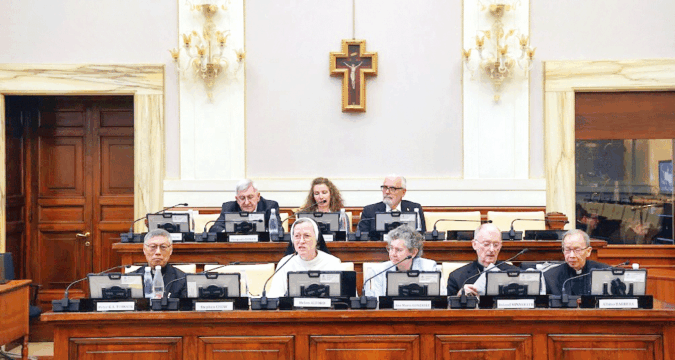
VATICAN (SE): Amid growing global uncertainty, scholars and Church leaders gathered in the Vatican from April 14–16 for the Plenary Session of the Pontifical Academy of Social Sciences, taking up a timely and challenging theme: “The Uses of Power: Legitimacy, Democracy, and the Rewriting of the International Order.”
The meeting took place as many political assumptions from the late 20th century are now being questioned. The once-held belief that democracy would spread easily worldwide has shifted to a more complex, uncertain reality. In this context, participants were encouraged to consider more carefully the nature of power—how it is exercised, justified, and ultimately guided.
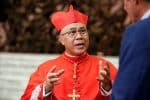
The morning session on April 16 was moderated by Cardinal Stephen Chow, S.J., bishop of Hong Kong, who was appointed to the pontifical academy by the late Pope Francis in September 2024.
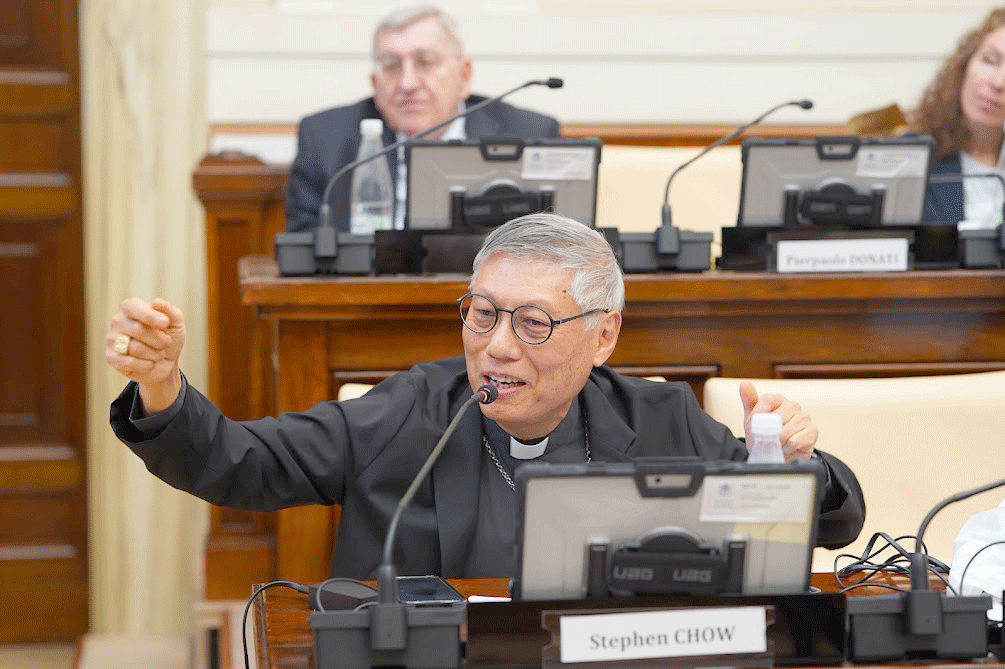
The plenary session focused on the urgent need to recover the moral foundations of political life. Discussions moved beyond technical or institutional concerns, turning instead to the deeper question of what makes power legitimate in the first place.
Inspired by Pope John Paul II’s teachings, participants recalled that peace is “an indivisible good” that can be achieved only if individuals and societies dedicate themselves to the common good. They stressed that peace is not merely the absence of conflict but the outcome of just and righteous relationships based on responsibility and moral truth.
Participants contrasted the past with the present. In 1998 and 2000, democracy seemed to be gaining ground worldwide, but now, that optimism has faded due to a crisis in liberal democratic systems, marked by distrust, polarisation, and tensions.
At the heart of the discussions was a reflection on the nature of power. Participants noted that power isn’t only about control or coercion. At its best, power unites people around a shared vision of the common good but also needs structures—laws, institutions, accountability—to maintain order and justice. This dual nature of power, both relational and institutional, remains relevant today as in classical philosophy.
Questions of legitimacy naturally arise. In a world that values the equal dignity of all individuals, authority isn’t just about power or procedures; it needs to be morally sound too. Human history shows an ongoing tension that still influences our political life: not only who has the right to lead, but also how leadership is carried out.
Speakers also voiced concern about the current state of democracy. While elections remain essential, there is a growing risk in reducing democracy to simple majority rule. Without strong institutions, respect for the rule of law, and protection of fundamental rights, democracy itself can be weakened. The spread of misinformation and the erosion of public trust were identified as serious challenges to democratic culture.
Beyond national borders, the global order is also undergoing change. The framework established after World War II—centred around institutions like the United Nations—is beginning to show signs of stress. In its stead, a more divided landscape is taking shape, driven by rival powers, changing alliances, and escalating geopolitical conflicts.
Finding the right balance between national sovereignty and international cooperation is a tricky and ongoing challenge, but it’s essential for progres
In this context, participants turned to the insights of Immanuel Kant and Georg Wilhelm Friedrich Hegel. Kant’s vision of a peaceful federation of nations continues to inspire, yet Hegel’s realism reminds us that such aspirations depend on the moral will of states—a will that is often fragile and divided.
The discussions also revealed a rising tension within countries. While efforts to protect freedom—like constitutional checks, separation of powers, and legal protections—are vital, they can sometimes be viewed as vulnerabilities in a competitive global arena. Finding the right balance between national sovereignty and international cooperation is a tricky and ongoing challenge, but it’s essential for progress.
A central moment of the plenary was the message sent by Pope Leo XIV, who offered a clear and compelling reminder: power must always serve the common good. It is not an end in itself.
“Democracy remains healthy only when rooted in the moral law and a true vision of the human person,” the pope wrote. Without such grounding, he warned, it risks slipping either into “a tyranny of the majority” or domination by powerful economic and technological interests.
The pope also drew attention to the growing concentration of power—whether in technology, finance, or military strength—in the hands of a few. Such imbalances, he cautioned, threaten both meaningful democratic participation and global stability. In response, he called for renewed commitment to international cooperation and stronger institutions capable of promoting justice and peace.
Echoing the social teaching of the Church, Pope Leo pointed to the need for a form of global governance rooted in subsidiarity and directed toward the common good. But structural reform alone is not enough. What is needed, he suggested, is a deeper moral and spiritual renewal.
The session concluded with a call to embrace what the pope described as a “logic of charity” in public life—a way of thinking and acting that places solidarity, reconciliation, and the good of others at the centre.
In a world marked by division and uncertainty, one conviction stood out clearly: the future of peace depends not only on institutions or policies, but on the moral integrity and shared responsibility of all.