HO CHI MINH CITY (LiCAS News): The Catholic Church in Vietnam is positioning migrant literature as a lens to understand exile as a shared human condition, linking displacement to the search for salvation.
“The bond between God and humanity: all of us are in a state of exile, seeking salvation in God; even Jesus entered into the condition of exile to redeem us,” said Salesian Father Joseph Nguyễn Văn Ấm, dean of the Faculty of Theology at the Catholic Institute of Vietnam, opening a conference on April 11.
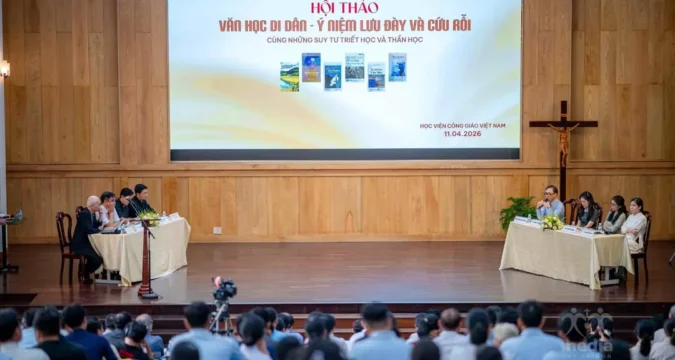
The gathering at the Archdiocese of Saigon’s pastoral centre brought together scholars, clergy, and students to examine how migration narratives, shaped by displacement after 1975, can deepen theological reflection and inform Christian formation.
Organised by the Catholic Institute of Vietnam, the conference carried the theme “Migrant Literature, the Concept of Exile and Salvation,” placing literature and culture at the centre of Christian formation.
Father Nguyễn, citing reflections from Pope Francis, said literature allows people to encounter deeper dimensions of human life and opens dialogue between faith and culture.
Presenters traced the emergence of Vietnamese diaspora literature after 1975, when waves of migration reshaped cultural expression among overseas communities.
The bond between God and humanity: all of us are in a state of exile, seeking salvation in God; even Jesus entered into the condition of exile to redeem us
Father Joseph Nguyễn Văn Ấm
Dr. Nguyễn Hồng Anh said memory remains central to these works, particularly recollections of war, loss, and the search for identity. First-generation writers continued publishing in Vietnamese for migrant communities, while later generations, raised abroad, often write in foreign languages while retaining a strong sense of origin.
Other scholars examined how exile is expressed through language and imagery. Dr. Võ Thị Ánh Ngọc pointed to the work of Linda Lê, whose use of French reflects both displacement and resistance to assimilation. Dr. Phạm Thị Hồng Ân highlighted writings by Nguyễn Đức Tùng, where water symbolises danger, death, and rebirth in journeys towards freedom.
Speakers also underscored literature’s role in rebuilding identity, saying writing helps migrants make sense of historical rupture and reshape fractured memory into meaning.
The final sessions turned to theology. Father Thomas Nguyễn Hoàng Duy described exile as a fundamental human condition, with people understood as pilgrims in the world.
Father Joseph Phạm Quốc Tuấn, a scripture scholar, said migrant literature mirrors the biblical story of salvation, from humanity’s separation from God to its redemption in Christ. He raised the question of whether people are willing to recognise God as their true home.
In closing, Father Nguyễn said the conference helped bridge literary scholarship and theological formation, helping the Church better understand the wounds and hopes of people today.