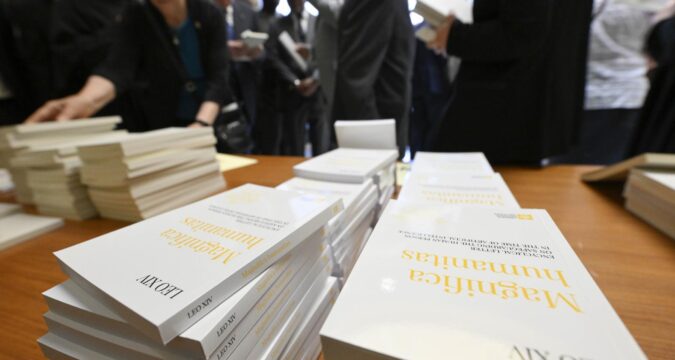
(LiCAS News): In a statement issued after the publication of Magnifica Humanitas [Magmnificent Humanity], the Catholic Bishops’ Conference of India [CBCI] described Pope Leo XIV’s first encyclical a moral framework for addressing the growing social risks posed by artificial intelligence in one of the world’s fastest-digitising societies.
The CBCI called the document “a valuable contribution to the Social Doctrine of the Church, in continuity with Rerum Novarum [New things]” and “a guide for dealing with the challenges of AI.”
The bishops said the rapid spread of AI in India has intensified concerns over unemployment, inequality, surveillance, and the concentration of power, especially among vulnerable communities.
They emphasised that the encyclical reaffirms the “centrality of the human person, created in the image of God” and calls for technological development to be “guided by ethical principles grounded in human dignity, justice, and the common good.”
India has emerged as one of the world’s most active centre for AI development, driven by expanding government investment and a massive information technology sector. The rapid transformation has fueled debate over the technology’s impact on jobs, education, social justice, and democratic accountability.
The CBCI said the Church in India plans to promote Magnifica Humanitasin parishes, schools, formation programmes, and social apostolates as part of efforts to deepen awareness of the ethical implications of AI.
Anthony Cardinal Poola, president of the CBCI, said the document offers “a clear moral compass in a time of rapid technological change.”
He stressed the need to protect “the poor, young people, and marginalised communities” from the potentially harmful effects of uncontrolled artificial intelligence.
“The CBCI encourages all Catholics and people of good will to read the encyclical in a spirit of prayer and to foster a culture in which technology is at the service of the integral development of every human being,” Cardinal Poola said.
The CBCI encourages all Catholics and people of good will to read the encyclical in a spirit of prayer and to foster a culture in which technology is at the service of the integral development of every human being
Anthony Cardinal Poola
The bishops also raised concerns over the possible impact of AI on Dalit communities, warning that automated systems could reinforce historical discrimination if left without ethical safeguards.
At the same time, the CBCI said AI also offers opportunities for inclusion “if used according to ethical and developmental criteria.”
The encyclical has also drawn significant attention in Indian media, according to a report by the Fides.
The Hindu described Pope Leo’s appeal to “disarm” AI as part of a “global ethical manifesto” and highlighted the pope’s call for stronger regulation of artificial intelligence technologies.
Meanwhile, the Economic Times and the Times of India focused on the possible effects of AI on employment, particularly within India’s large IT sector.
Indian media broadly welcomed the encyclical’s emphasis on regulating AI processes and defending “the primacy of the individual over profit and innovation,” Fides reported.