BANGKOK (LiCAS News): Women are taking on expanded leadership roles in the Catholic Church as synodal reforms under Pope Francis open new spaces for participation in governance and decision-making, Church leaders heard during an April 25 seminar in Bangkok, Thailand.
Organised by the Division of Catholic Women of the Archdiocese of Bangkok, the gathering brought together clergy and lay participants to examine how the Church’s synodal journey is reshaping the role of women, both globally and in local communities.
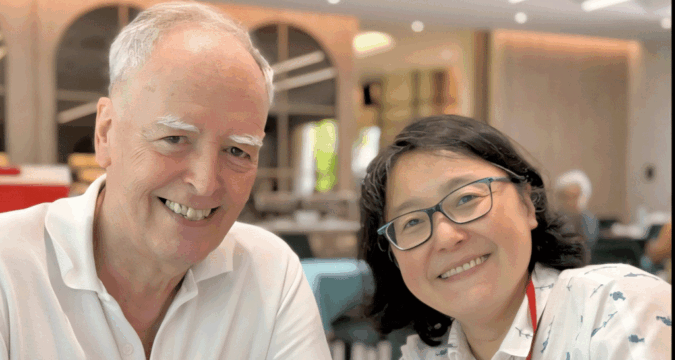
Jesuit Father Miguel Garaizabal, regional superior of the Thailand Jesuit Region, said recent developments in the Vatican signal a gradual but meaningful shift towards broader inclusion.
“Women are increasingly being appointed to positions of responsibility in the Vatican and in local Churches,” he said, pointing to a growing number of female secretaries, undersecretaries, consultants, and administrators serving in the Roman Curia.
Under the late Pope Francis, the Church saw a notable expansion of women’s participation in governance.
Women are increasingly being appointed to positions of responsibility in the Vatican and in local Churches
Father Garaizabal
Among the most significant developments was the appointment of Xavier Sister Nathalie Becquart as undersecretary of the Synod of Bishops, making her the first woman granted voting rights in a synod assembly.
Women have also been appointed to the Dicastery for Bishops, giving them a voice in the selection of new bishops, an area historically reserved for male clergy.
In 2025, the late pope further broke new ground by appointing Consolata Sister Simona Brambilla as prefect of the Dicastery for Institutes of Consecrated Life and Societies of Apostolic Life, the first woman to lead a major Vatican department.
He also named Sister Raffaella Petrini of the Franciscan Sisters of the Eucharist, as governor of Vatican City, placing her in charge of the city-state’s administration and daily operations.
These developments, once considered unthinkable, signal what many observers describe as a cautious but decisive shift towards greater inclusion of women in Church leadership, even as ordained ministry remains reserved to men.
The Synod is not simply about addressing problems. It is about listening, to one another and to the Holy Spirit. It reflects the very nature of the Church: a people journeying together
Father Garaizabal
Father Garaizabal said these changes are closely tied to the vision of the Synod on Synodality, a global Church process centred on listening, participation, and shared mission.
“The Synod is not simply about addressing problems,” he said. “It is about listening, to one another and to the Holy Spirit. It reflects the very nature of the Church: a people journeying together.”
He stressed that synodality calls every baptised person to active participation.
“No one is merely a supporting character. Everyone has a role to play,” he said.
During the synod, women were invited to participate as full voting members, marking a significant step towards their inclusion in high-level pastoral decision-making.
Pope Francis also appointed two women as president delegates of the Synod assembly: Sister Maria de los Dolores Palencia of Mexico and Sister Momoko Nishimura of Japan. Acting in the name of the pope, president delegates preside over synod sessions when the pontiff is not present.
No one is merely a supporting character. Everyone has a role to play
Father Garaizabal
The synod brought together heads of Vatican dicasteries, bishops from around the world, papal appointees, theologians, and representatives of religious congregations and lay faithful, men and women alike, reflecting a broader push towards a more participatory Church.
The Vatican has also released a report from a synod study group examining women’s participation, calling for expanded roles in leadership and governance while maintaining the current discipline regarding ordained ministry.
Participants at the Bangkok seminar said these developments carry implications for local Churches across Asia, where women have long played central roles in parish life but remain underrepresented in formal leadership structures.
As the Church continues its synodal process, the discussion in Bangkok pointed to a direction that is becoming harder to ignore: a more inclusive model of leadership rooted in shared responsibility, where women’s voices are not only heard but increasingly shape the Church’s mission.